


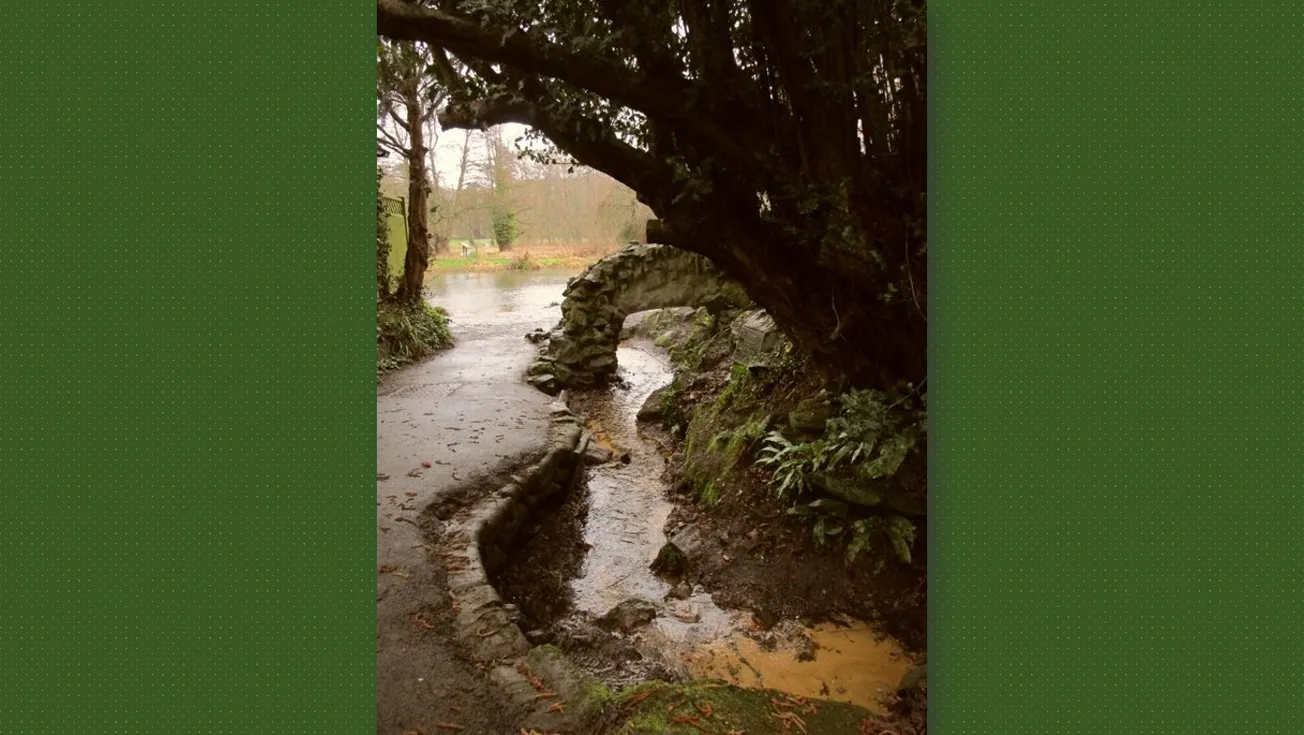
In southern England, along the hollowed ruins of once-hallowed ground, there bubbles a spring older than recorded time. “The spring of the glorious Catherine,” as it was described in 1328, had carved its curving track into Guildford’s landscape centuries before Shakespeare’s “Henry VIII” lamented that men’s “evil manners live in brass; their virtues we write in water.”
Yet King Henry needn’t be so maudlin. Near the spring, an old fieldstone wall gives way to a small alcove, in which once resided a public water fountain fed by the spring’s aquifer. Directly below this ornate watering hole - now dry - crouches a second, smaller fountain under a simple arch on which are carved the words “FOR DOGS.”
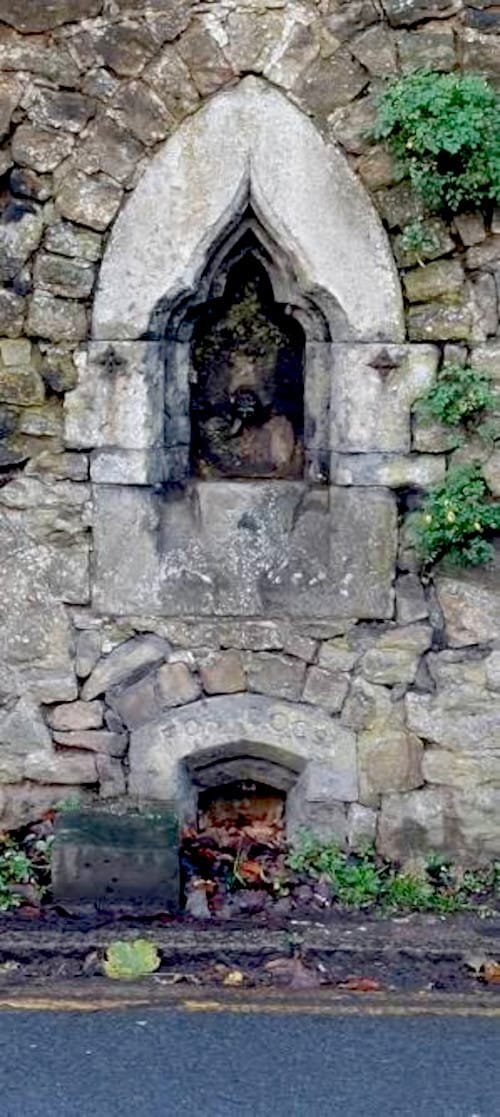
Generations after their earthly departures, the workmen’ s compassion for lesser creatures remains, created in water and stone for strangers and strays they likely never knew. Purebred or pure mutt, all were afforded the same neighborly respite, without judgement or proof of pedigree.
If only we could find the same compassion for one another today as was offered to Guildford’s dogs in the 1800s or to Medieval pilgrims at Katherine’s spring centuries earlier. Instead, a growing number of nationalists have classified “empathy” as a four-letter word showing weakness and wokeness instead of the badge of brotherly love and Christian compassion it once was.
Necessity makes neighbors of us all. Our hour of greatest need is hardly one that is also the most convenient. Yet as a nation we’ve survived untold calamities, not by dumb luck but through our strength as a nation of neighbors in the great Melting Pot.
Our melting pot has gotten shallow as of late, given the president’s recent travel ban on 19 nations, many African or Muslim. Squabbling over which neighbors are the “right” kinds of people to help does little to hide the isolationism lurking beneath it. It does, however, take a sledge hammer to what shards remain of our nation’s credo as purported by the Statue of Liberty - “give me your huddled masses, yearning to breathe free.”
It is also economically short-sighted and morally noxious to claim a wide swath of worthy families - hardworking, motivated and willing to put down roots - can no longer stay in or even enter the United States due to the actions of one person from one of those 19 nations. Further, the Congressional Budget Office projects immigrants will add $7 trillion to our nation’s economy during the next decade. That is no small feat.
Banning travel from more than a dozen nations is no exercise in public safety, as the White House recently purported. Rather, it is a witch hunt casting the same walls of suspicion around the Good Samaritan as the Biblical robbers who left their victim lying in the ditch.
Those who actively participated in the January 6th riots, where officers of the law were both injured and killed, have since been pardoned by the president. Their violent insurrection against a legitimate election, against the bedrock of our democracy, was forgivable in the president’s eyes. Yet families with no criminal record other than being born brown in a third-world country are now allegedly too dangerous to even begin the rigorous immigrant vetting process.
As reported by the American Immigration Council, the 19 countries facing the travel ban are allegedly places “where the U.S. cannot trust the government to accurately identify people or security risks,” yet this explanation “is one of a few shifting rationales for the travel ban, even though it has been widely reported that the administration is using the ban as a threat to try to coerce countries into going along with other parts of Trump’s agenda.”
Both the president and vice-president have repeatedly asked American women to have more children, thus boosting the native population and the nation’s economic growth potential. Simultaneously, neither have supported more early childhood centers, affordable housing initiatives, stronger healthcare subsidies, or even better maternal care programs. Furthermore, they have created a health insurance nightmare that pushes new parents into bankruptcy should any medical emergency arise during or after labor. It’s akin to swearing there is no room at the inn while blaming Mary and Joseph for only needing one manger as a cradle.
More than 100 years ago, English stone masons built a water fountain for their neighbors, including their dogs. It still stands today as a testament to their compassion. Their work was not diminished each time someone drank from it. Instead, it guaranteed the virtues of their generosity outlasted the chaos of their brief time on Earth, “full of sound and furry signifying nothing,” as King Macbeth famously mused about life.
His counterpart, Henry VIII, was wrong. Our virtues do not disappear downstream so quickly after our demise. Nor must they be carved in brass to outlast us.
What good we do for others — despite their nationality, their social media pedigree, or even their four paws — often outlasts us in ways we cannot imagine.
--30--
Comments