


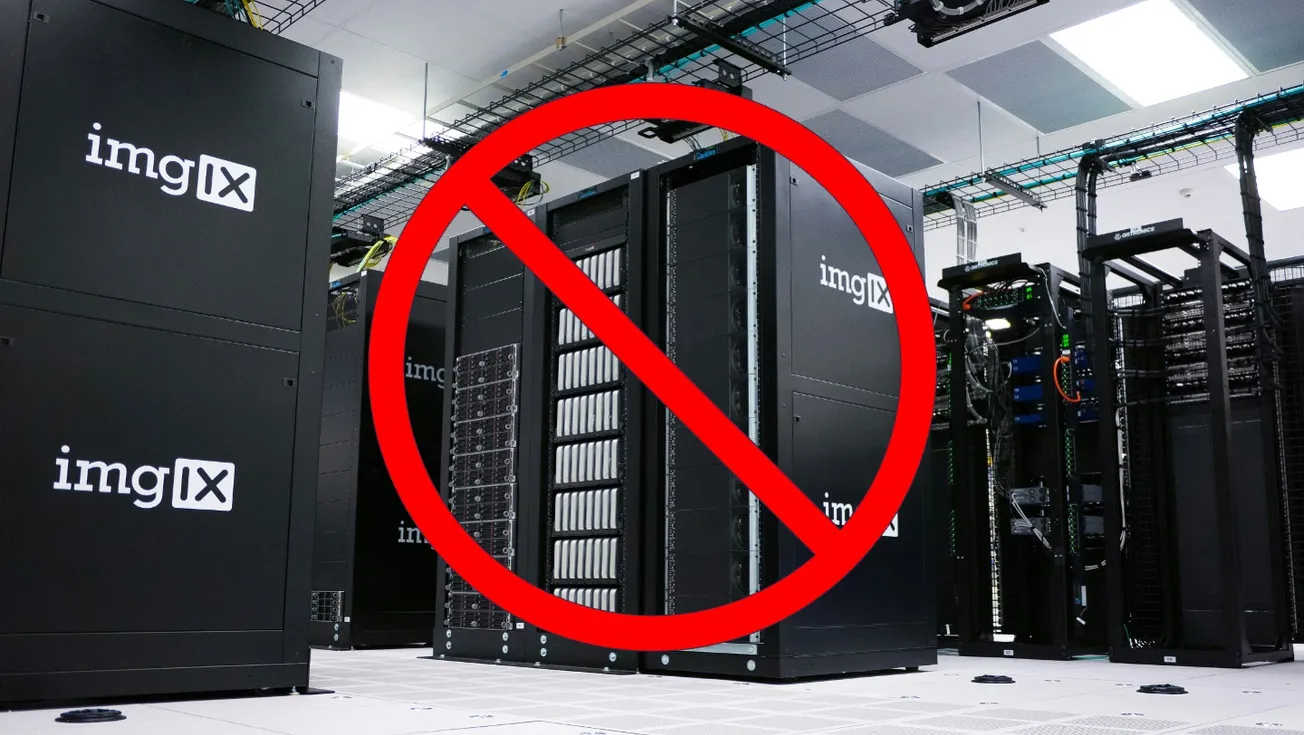
On April 30, in a Planning Commission work session most Lexingtonians never heard about, a consultant working under contract to LFUCG Long-Range Planning sketched out what would be one of the most aggressive municipal data-center policies in Kentucky: a hard 50,000-square-foot cap on data centers in Fayette County, with anything larger prohibited countywide.
The proposal came from Caleb Rosico, a principal at Tannel Spangler Walsh & Associates, the Atlanta-based firm leading the consultant team for the Blue Sky Small Area Plan. Rosico is preparing a Zoning Ordinance Text Amendment that would rewrite the city’s B-4, I-1, and I-2 industrial districts. Tucked inside the rewrite is the city’s first formal attempt to define and regulate data centers in the zoning code.
The timing is unusually loaded. Kentucky’s General Assembly spent 2025 actively trying to lure hyperscale data centers, and Fayette County is one of seven counties named in the resulting tax-incentive statute. The ZOTA Rosico is preparing would arrive at the Urban County Council with a different message: not here, not at that scale.
What’s actually in the draft
Today, Lexington’s zoning ordinance does not define a data center at all. The use is, as Rosico put it at the work session, “implied by reference under certain use provisions, but it’s not clear.” His draft would create two new defined uses:
- Minor data center — under 50,000 square feet. Permitted by conditional use permit in the B-4 (warehouse and distribution) and I-1 (light industrial) districts.
- Major data center — anything 50,000 square feet or larger. Not permitted anywhere in the industrial districts covered by the proposal.
The minor-data-center category is intentionally narrow. Rosico described the target user as a UK spinoff or a tech firm with on-site computing needs, not a hyperscale operator. Even at that scale, the conditional-use review would require four submissions that don’t exist in the current code:
- A water consumption plan
- An energy consumption plan
- A transmission-line impact plan
- A noise plan
The draft also imposes what Rosico called “almost a quarter mile” of separation from adjacent residential, with a landscape-strip buffer designed to attenuate noise. He told the commission that the noise issue is more serious than commissioners might realize. “Data centers, whether you may know this or not, can be extremely loud, extremely, extremely loud,” he said.
“It’s just not possible”
Frank Penn, the Planning Commission’s senior member and a regular interrogator of staff presentations, did not bother with diplomacy when Rosico got to the major-data-center prohibition.
“I don’t understand Lexington and where this is located, even talking about large data centers,” Penn said. “I mean, what is that going to do? What is it going to do for the community?”
Rosico answered: “Part of why we have recommended outlawing them over 50,000 square feet is because of that. I mean, it’s just not possible.”
Penn pressed: “To put an option in there to do it is just going to create questions and problems that you can’t handle.”
“We don’t believe that those are appropriate anywhere in the community,” Rosico said.
Hal Baillie, longtime planning staff and the principal planner on the project, jumped in to back up Rosico’s framing. “Mr. Penn, we are getting questions about these as a primary land use, and this project, the small area plan, gives us the opportunity to have this conversation to modernize our I-1, I-2, and our B-4 zones. And if we don’t get into this now, I think we might get left behind.”
The state context: Fayette is a target
The reason “we are getting questions” is Kentucky House Bill 775, signed in 2025. The bill expanded a sales-and-use-tax exemption that previously applied only to Jefferson County and made it available statewide, with the required minimum capital investment scaled by county population.
Fayette County, with a population over 100,000, sits in the highest tier. To qualify here, a data-center project must commit a minimum capital investment of $450 million. The exemption then runs for 50 years on computer equipment.
Other Kentucky counties named in the same tier include Boone, Daviess, Hardin, Jefferson, Kenton, and Warren. Counties between 50,000 and 100,000 — including neighboring Jessamine and Scott — qualify at a $100 million floor.
Senate President Robert Stivers of Manchester pushed the amendment that opened the incentive to all counties. As Kentucky Public Radio reported in December, Stivers told a legislative meeting in April 2025 that “within the next few months, you will see more and more announcements about artificial intelligence and data centers.” LG&E/KU has since received Public Service Commission approval to spend $3 billion on two new gas-fired power plants whose business case rests largely on the load forecasts from data centers expected in the next several years.
That is the boom Rosico’s ZOTA would tell to go elsewhere when it reaches Fayette County.
Other Kentucky communities have already pushed back
Lexington wouldn’t be the first community in the state to say no. Residents of rural Oldham County organized in 2025 to defeat a proposed hyperscale data center. The Franklin city council and planning commission both voted unanimously last fall to reject a zone change a data-center developer was seeking.
Even Stivers, the architect of the statewide tax incentive, has acknowledged the speculative-developer problem. He called the firms behind the rejected projects “cowboy speculators” who “just came in and bought land or took options on land” without any verified relationship to a major tech client. House Bill 593, filed in the 2026 session by GOP Rep. Josh Bray of Mount Vernon, would add guardrails requiring data centers to cover their own transmission and infrastructure costs and certify compliance with all local and state requirements before remaining eligible for the state tax break.
Lexington’s draft ZOTA goes further: rather than require a data center to comply with local rules, it makes major data centers locally non-compliant by definition.
The water question
The exchange that may matter most for Lexington’s drinking-water supply came late in the work session, when Commissioner Molly Davis raised cooling water and the impact on the water table.
“The data centers, in my understanding, the requirements for cooling and the impact on water is a huge — I don’t know, does that conversation belong here or does it belong elsewhere?” Davis asked.
“It belongs here,” Baillie answered.
Penn followed up with a more specific concern: the Royal Springs Aquifer, which supplies drinking water to Georgetown and parts of Scott County and runs underneath the northern half of Fayette County.
“On the north side of Fayette County, we have the Royal Springs Aquifer,” Penn said. “What are the impacts on groundwater? Where would that discussion take place? Or do we already have built-in protections?”
The answer from Eve Miller, the senior planner coordinating the project, was that the protections are not really written down. “We currently have recommendations that are made by the Royal Springs Wellhead Protection Committee,” Miller said. “There aren’t any written protections at this point. However, that is something that we wrote in our comprehensive plan to look at — what are the things that we want to bolster to protect our groundwater and protect our environment?”
That is a striking admission. Lexington has a comprehensive-plan goal to bolster groundwater protection, and an advisory committee that issues recommendations on a case-by-case basis, but no codified rules. The data-center ZOTA’s water consumption plan requirement would be the first time such submissions are required in any zoning case.
What gets a “yes” — and what changes for everyone else
The minor-data-center category is one of five changes Rosico is folding into the same ZOTA. The others would:
- Replace the existing process-based industrial regulations (which classify uses by where in the manufacturing process they occur) with an off-site-impact basis. New “low-impact industrial and manufacturing” uses would have to keep most activity indoors with no detectable off-site noise, heat, vibration, odor, or particulate.
- Allow up to 60 percent of an I-1 or I-2 development plan — rather than 60 percent of any individual building — to be office. This formalizes the campus arrangement Elliott already operates on Blue Sky Parkway.
- Permit a public-facing restaurant of up to 30 percent of a food-and-beverage manufacturer’s space, including distilleries, wineries, and breweries.
- Define new uses including storage yards, self-storage, research and development, and indoor growing systems (hydroponics and aquaculture).
- Completely rewrite the standards governing waste-related uses such as incinerators.
Rosico stressed that existing businesses on Blue Sky Parkway and elsewhere would not be affected. “They would be all legal,” he told the commission. “I wouldn’t even say legal and nonconforming.”
The calendar
Eve Miller closed the work session with the timeline. The Blue Sky Small Area Plan’s final draft will be presented at the Planning Commission’s May 21 work session. A public hearing on adding the plan to the comprehensive plan is scheduled for May 28. Miller said the formal ZOTA filing for the B-4, I-1, and I-2 zones is planned for June, after which it will move through the Planning Commission’s regular text-amendment process before reaching the Urban County Council.
That puts a Council vote sometime in late summer or early fall — well within the window during which Stivers and other state lawmakers expect new data-center announcements to land in Kentucky communities. Rosico has flagged that the citywide implications of his definitions could outlive Blue Sky. “Because these are citywide zoning definitions, when the Unified Development Code is prepared, there may be an opportunity to think about allowing them in more places,” he told commissioners.
For now, the Lexington draft draws a line at 50,000 square feet — and on the wrong side of it, the line is a wall.
--30--
Sources: April 30, 2026 LFUCG Planning Commission Work Session (meetings.lexingtonky.news/meeting/6759); Kentucky House Bill 775 (2025); Kentucky House Bill 593 (2026); Louisville Public Media reporting on Kentucky data-center policy.
AI disclosure – Research and drafting assistance for this article was provided by Anthropic’s Claude Opus 4.7. The model was given access to the LFUCG Meetings MCP server (meetings.lexingtonky.news), which it used to search the meeting archive, retrieve auto-generated transcripts of the April 30, 2026 Planning Commission Work Session, and surface verbatim quotes from Caleb Rosico, Frank Penn, Hal Baillie, and Eve Miller. The model also conducted web searches for context on Kentucky House Bill 775, House Bill 593, and reporting from Louisville Public Media. The reporter directed the research, selected the angle and quotes, verified the claims, wrote the headline, and is responsible for the published piece. Meeting transcripts were auto-generated by OpenAI Whisper-1 with speaker labels from Granicus closed-captioning; readers who want to verify quotes against the source can do so at the Granicus video.
Written by Paul Oliva. Cross-posted from the Lexington Times.
Comments