


One of the biggest mistakes I’ve made this last decade and even more so in the last year is believing that listening to Trump voters — friends and family, but also strangers — would bring us to a mutual truth. That listening would make a difference. That I would learn from them. That I would come to understand what made Mr. Trump so appealing. That I might help them understand why I find him not only abhorrent but dangerous.
I tried to do this because it felt right to engage with people who disagree with me politically as I have done most of my adult life, and because I felt it was right as a citizen, as a neighbor, as a friend and family member, and certainly as a writer.
I have failed on all counts.
The cliches in my brain stood too firm: The way out is through; the path to mutual understanding is engagement; mutual understanding brings peace.
What I refused to consider was the deleterious effect isolation and screen-media, be it social media or any kind of on-screen infotainment disguised as ‘news’, has had on both our collective and individual consciousness.
What I refused to consider was the insatiable American appetite for lies and rage.
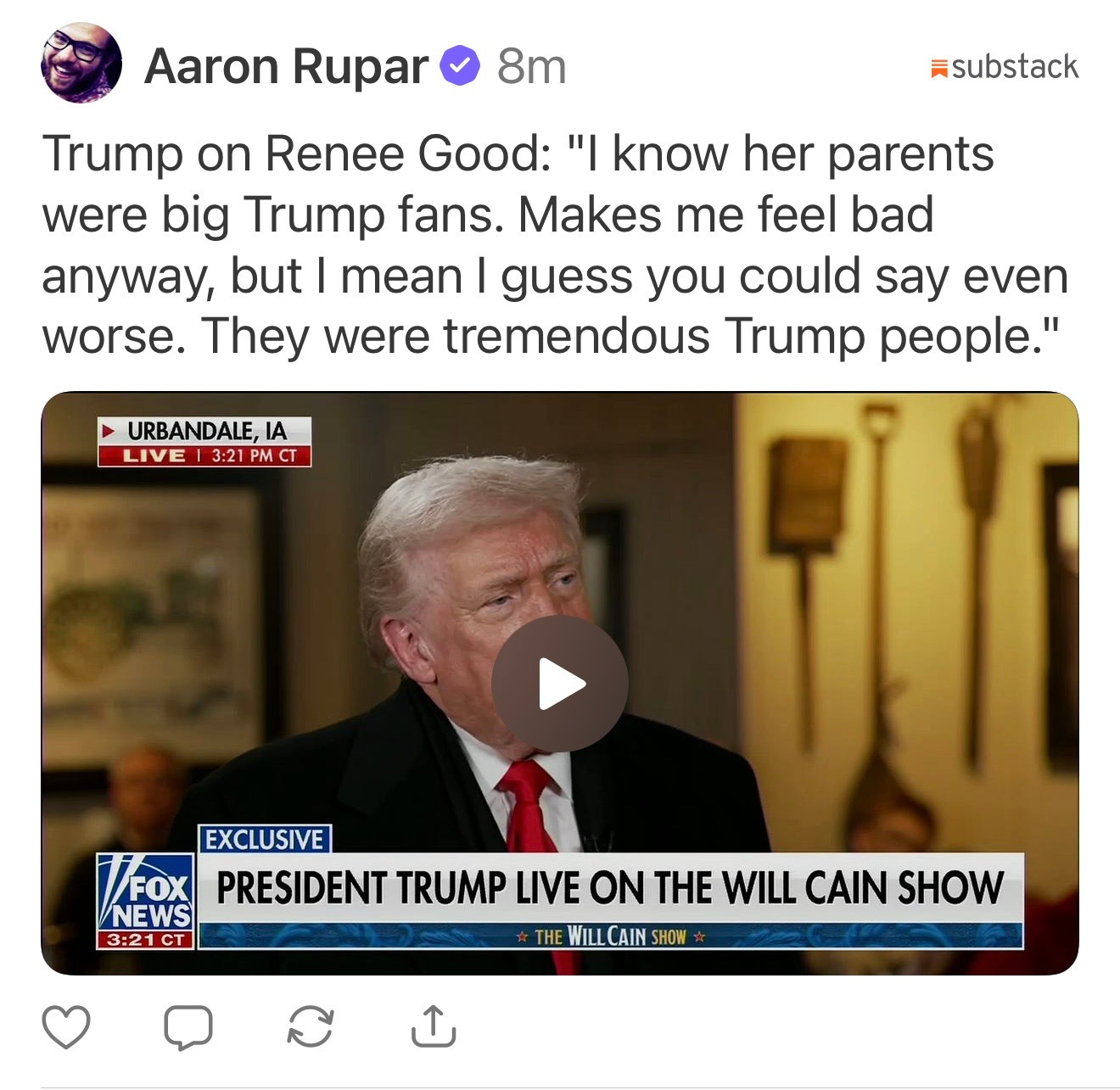
As our televisions have dwarfed our family rooms, our appetite for anger has dwarfed our humanity and made us believe, falsely, that we are informed. If we just leave our TVs on MSNBC or Fox or CNN or OANN for enough hours, we will know more, we think. We will catch up. We will finally get it. The shiny professional experts in their hair and makeup and brightly colored blouses and ties will inform us with their steady loop of background noise, will tell us what we missed while we crash on the couch after a long workday or while we make supper and help with homework. While we multitask. Democracy as afterthought.
Gone are the days of sitting at the kitchen table, reading the newspaper.
Gone are the days of sitting down to watch Walter Cronkite (or Dan Rather or Peter Jennings) as they inform all of us, regardless of political party, what they and their newsrooms think we need to know.
And those days are not coming back.
We would be unbearably bored.
We are too far gone.
This week, I was listening to an interview with author Andre Dubus III in which he said this near the end. “The reason I don’t own an iPhone, the reason I’ve never sent a text, the reason I’ve never been on social media — I don’t even know what it looks like — is, as a teacher of young people, right around 2011 or 2012 I noticed that their daily joy plummeted. It’s not global warming, which is horrific enough, it’s not mass shootings, which is horrific enough, it’s staring at these screens six to 11 hours a day and becoming incredibly, toxically self-involved, distracted, and not in their bodies, not in their souls… And I think even on a semiconscious or subconscious level, we’re worried about comments, follows, likes, and we sure as hell don’t want to get cancelled.”
Those young people he speaks of are many of us, no matter our age, are they not?
Media executives and tech oligarchs have confiscated our lives with their brightly-colored screens and like buttons and algorithms. These are the elite pretending they are saving us from the elitists while happily cashing in on our collective misery and, yes I’m going to say it again, our insatiable hunger for rage and outrage.
They are also a key arm of the Trump administration.
Yet, when I watch the video murders of Renee Good and Alex Pretti by gangs of masked federal agents who remind me of the brownshirts in every Nazi film I’ve ever seen, I know that I am not seeing what family, friends and neighbors trapped inside other algorithms or TV programs see. This has been true for the last decade and more, and most particularly since January 6, 2021. And still, I continued to engage, to sit with, to listen, to ask questions of those who saw “the news” differently than I did because I thought that that time commitment and engagement made a difference.
I was wrong.
We are often told not to compare what’s happening today to what happened in the lead up to WWII, that such comparisons are not only unfair, inaccurate, and inflammatory, but that such comparisons will not lead us back into the light. But we also have to consider the facts on the ground, which are these:
Without Twitter and Facebook, would Donald Trump have ever become president at all?
Without social media and his commandeering of both traditional TV media and cable, would he have the reach to threaten elected officials and business leaders into silence and compliance?
Without his personal propaganda arm, Fox News, and without the many 30 second and 2 minute viral clips from Fox, CNN, MSNBC, etc. for our doomscrolling, boredom-filling pleasure, would he have been able to manipulate the truth of what happened on January 6, 2021? Like they are already manipulating the street executions of Renee Good and Alex Pretti?
I no longer believe that the conversations I’ve had with Trump voters have mattered one bit. If anything, I wonder if I have helped them become further entrenched.
Like the days of Walter Cronkite and reading the newspaper at the kitchen table, the old kind of political conversations we used to have no longer work.
January 6 was our clarion call.
The blanket pardons of all January 6 perpetrators was our warning.
It is true that we are not dealing with the Nazis. The Nazis, thank God, did not have Fox News propaganda and social media billionaires and iPhones. Those are the things WE have, the tools unique to our era of presidential narcissism, government overreach and abuse and wanton illegality. One day, what we are experiencing today will be called by its own name — Trumpism? Something else? — and our grandchildren and great-granchidren and their children will also be told, as we are being told, not to make comparisons to the past, to the incomparable.
Alas, what we are dealing with today, in this moment, is our own set of troubles; our own evil, cruel, malicious, destructive and increasingly lawless government; our own lack of humanity and basic common sense. And there is no amount of listening or talking to those who find pleasure in it, who have found a cult leader in it and kinship in it, out of such addictive rupture and rapture.
We are not in our bodies. We are not in our souls.
My mistake was not seeing this sooner.
--30--
Comments