


Some years ago, I was having lunch with a contact of mine, a young Burmese reporter, in a noodle shop in Yangon, the old capital of Myanmar. He chose the restaurant because it was generally safe: packed with customers who ate quickly and left. The pickled tea leaf salad was good too.
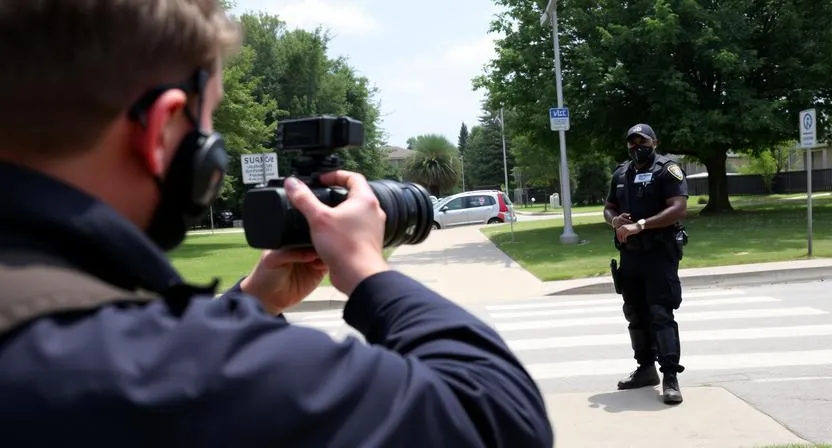
As we started to eat, one of two men at a nearby table began taking pictures in our direction with a small camera. Nobody does that in a Myanmar restaurant except tourists, and these fellows weren’t tourists. My friend couldn’t see them, so I described what I saw.
“They’re freelancers. They take pictures around town and shop them around to the security services.” he said, without looking up. Then in one fluid movement he nodded goodbye, picked up his briefcase and slipped out a side door into the alley.
Local journalists take such precautions daily. A careless meeting with a foreigner, even with another Burmese, could land you in Yangon’s Insein Prison, or get your family kicked out of their home. It was bad then; it’s worse now.
The military junta outlawed most of Myanmar’s media outlets after the Feb. 1, 2021 coup d’état, fearing reporting on the army’s crackdown and reporters’ skill at unmasking human rights abuses and corruption. Bloodied but undeterred, enterprising reporters went underground, online, or sometimes worked in plain sight, especially photographers. The Tatmadaw — the multiple branches of the armed forces — responded harshly, with extrajudicial killings and prison sentences under Section 505(a) of the penal code. The section was hurriedly updated to make “fake news” a criminal offense, and “incitement” another device to jail protesters. A mass popular uprising spread like wildfire and the country erupted into civil war. Hundreds of protesters were reported killed, and thousands were arrested. Throughout the violence, citizen news reports found their way out and into the international press. Local media were on the streets and effective.
In 2024, 35 Myanmar journalists were imprisoned. That year the Committee to Protect Journalists, an independent non-profit, called Myanmar the world’s third-worst jailer (after China and Israel and the Occupied Palestinian Territory). Country rankings vary by year. Worldwide, at least 435 journalists and 34 media workers were in detention at the end of May 2026, according to Reporters Without Borders, a Paris-based group.
Imprisonment is one part of a spreading global assault on the media. Between 1992 and 2026, 2,563 journalists and media workers were killed, sometimes murdered, other times caught in crossfire or while on “dangerous assignment.” In 2025 alone, 130 journalists and media workers were killed, the most in a year since the CPJ started counting.
***
Growing up in the United States after World War II, I became, somewhat by accident, a reporter and foreign correspondent. I saw journalism as public service, and press freedom as a given. It was not always an enthusiastic given; many politicians, including presidents such as Richard Nixon, regarded the press as a constitutionally mandated but meddlesome nuisance.
Over time, Americans — the whole country — seemed to get lazy about our freedoms. As we languished in a semi-torpor, Donald Trump blindsided the country with his speed and aggression.
Early in his presidency, Trump denounced journalists as “enemies of the people,” “human scum” and “some of the worst human beings you’ll ever meet.” Those are a few of the epithets mentioned by Leonard Downie Jr. in a 2020 special report for the CPJ. There were also graphics promoting violence against the media. In 2017 Trump tweeted a mock video of himself pummeling a prone figure with a CNN logo as its head; the video went viral.
As President-elect in November 2016, Trump sat for an interview with Lesley Stahl of “60 Minutes.” During the warmup chat, cameras were not yet recording. Two years later, a still-astonished Stahl recalled: “He said: ‘You know why I do it? I do it to discredit you all and demean you all so that when you write negative stories about me no one will believe you.’”
Ten years later, the president still hammers away at the news media, now accusing reporters of “seditious behavior punishable by DEATH.” Returning to Washington from China on Air Force One in May, the president accused David Sanger, the chief Washington correspondent for The New York Times, of treason. Unless you saw the video, it can be hard to imagine the President of the United States spitting out that venom inches from a reporter’s face.
The Committee to Protect Journalists summarized what the press is up against: “Journalists working in the United States are facing extraordinary and intensifying pressures amid President Donald Trump’s second term. From frivolous lawsuits and serious restrictions on coverage, including the removal of experienced journalists from the White House and the Pentagon, to an unprecedented surge of immigration-related assaults on journalists by law enforcement, press freedom in the United States is under siege.”
Even six years ago, Downie’s report deemed the threat serious: “Along with Trump’s thousands of documented false statements and his promotion of discredited conspiracy theories, the administration’s attacks on the credibility of the news media have dangerously undermined truth and consensus in a deeply divided country.”
On Reporters Without Borders’ World Press Freedom Index, the U.S. ranks 64th among 180 countries. That’s considerably better than Myanmar, at 166, but the U.S. position is falling, down seven points from 2025. (Norway’s at the top; Eritrea’s at the bottom.)
For me it gets personal, going back to threats and reported atrocities in another time. I’ve spent the better part of a professional life in countries where governments grossly abuse the people they’re supposed to serve. Countries where government authorities or their proxies regard armed robbery as a voluntary payment scheme, and assault and battery as multi-purpose warnings. I’ve met people who’ve been beaten or mutilated, who’ve seen others disappeared because they had no more money to be extorted, or who begged that their children be spared kidnapping into the ranks of soldiers or slaves. I’ve seen the hollow-eyed children being led from the bush after years in captivity. These are not rare encounters; many international reporters have documented the same.
The abuse I chronicled overseas left me profoundly disoriented last winter as I watched television coverage of Trump’s ICE goons on the job in Minneapolis – dragging people out of their cars at gunpoint, including a disabled woman on her way to a hospital appointment; separating and locking up family members who couldn’t prove their immigration status or provide ID. I asked, “Is this really happening in an American city?” Yes, because we had grown indifferent to the Trump administration’s harsh treatment of migrants. Yes, because citizen journalists filmed hundreds of incidents, including two fatal shootings, and pumped them out to a world audience. ICE, as cruel and violent as they could be, still were uneasy knowing that the press had the legal right to film in public. There would be no Tiananmen Square in Minneapolis.
Public trust of the news media has declined in recent decades. Deepening polarization between America’s right and left is one cause, as both sides hurl charges of bias. The excesses of cable television and talk radio and now the unrestrained idiocies of social media, at which Trump excels, add gasoline to the fires. The constant attacks have their intended effect on public trust in general, and on some people who believe their commander-in-chief is giving them a direct order.
The daily turbulence doesn’t help a stable society, but it can be smoothed by rigorous fact-based reporting. Traditional news gathering, fact checking, and paid journalism (real journalism costs money) keep the news media afloat, conservative and liberal. And we need both of those.
After a long career, which has included my own run-ins with violent militias, I’m still convinced that a free press is necessary for a well-ordered society, even a society with occasional tremors. People willing to use coercive measures against an unarmed population enjoy impunity – and they do enjoy it – and are usually removed only by a stronger and greedier group. Or, hopefully, by citizens’ groups wielding the tools of a free press. In Myanmar, for instance, or in several countries or territories in the Middle East and Africa.
Philippine investigative journalist and author Maria Ressa for years has warned democratic countries to urgently safeguard press freedom, with collaborative ventures if possible. She is not surprised at the slippage of the United States under Trump. Ressa, who was awarded the Nobel Peace Prize in 2021, along with Russian journalist Dmitry Muratov, later told an interviewer how a free and vibrant media works:
“In countries like the United States, the Philippines, and most democratic countries around the world, the news organizations and journalists are the connective tissue between governments and the power of the people. . . . Journalists help make sure that governance is transparent, that leaders are held accountable, and that they’re consistent.”
If you remove news organizations and journalists from that equation, you’re left with a closed system: an oligarchy, a government of Family & Friends that thrives on self-dealing and turns away questioners.
Transparent democracy is as refreshing as Maria Ressa suggests, even though it’s sometimes messy and noisy. News organizations are the oil that keep the engine running, and the whole democratic enterprise benefits from examination. Journalistic checkups help a government stay free of the corruption we’re witnessing now.
--30--
Written by Philip C. Winslow, who has been a journalist for 50 years. He has worked for the Christian Science Monitor, the Toronto Star, Maclean’s magazine, CBC Radio, CTV News and ABC Radio News. He wrote for The Courier-Journal and the Lexington Herald-Leader, and was a staff reporter for the Somerset Commonwealth Journal. He also served in United Nations peacekeeping missions in the former Yugoslavia and Sierra Leone, and worked for three years for the UN refugee agency in the West Bank. He is the author of Sowing the Dragon’s Teeth: Landmines and the Global Legacy of War, and Victory for Us is to See You Suffer: with the Palestinians and the Israelis in the West Bank.
Comments