


FRANKFORT — The teetering checks and balances between Kentucky’s judicial and legislative branches over the power to reprimand judges kept swinging Wednesday.
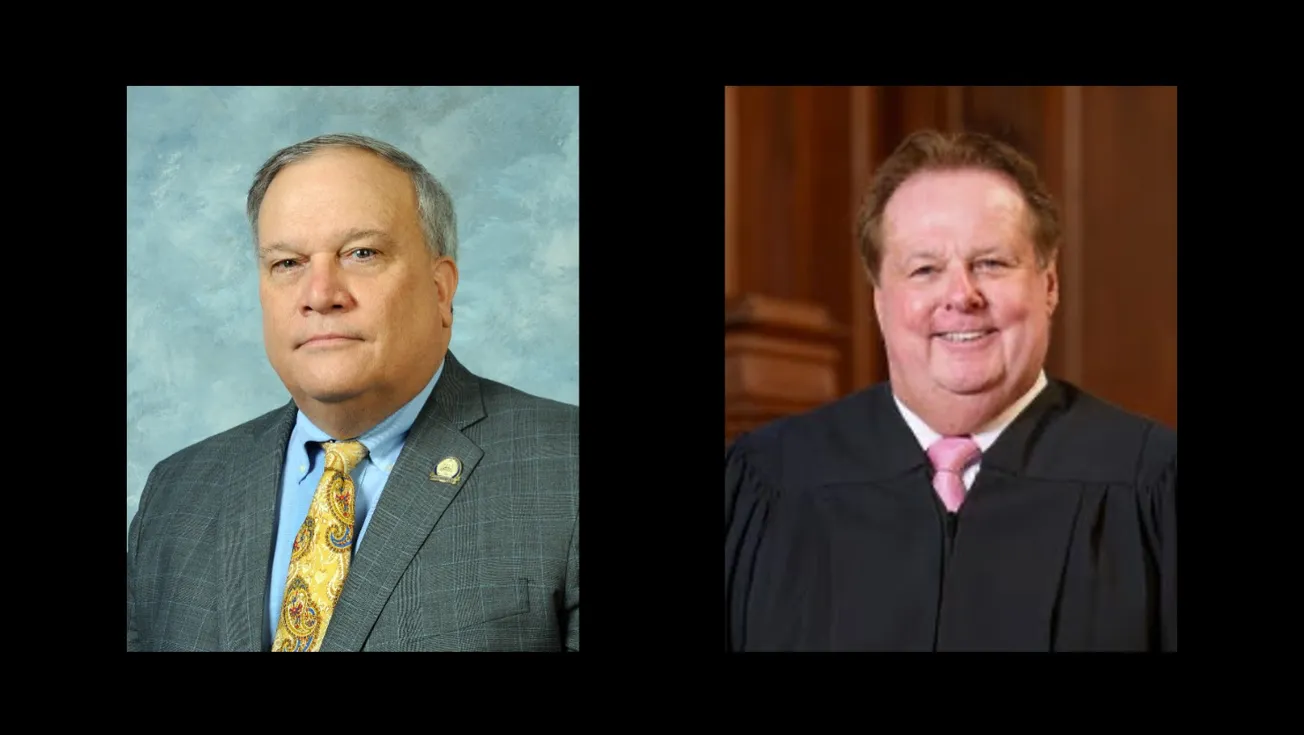
The Republican-controlled legislature censured state Supreme Court Justice Kelly Thompson for portions of his recent opinion in a Lexington judge’s appeal of her impeachment by the state House.
The Senate approved a censure resolution sponsored by Senate President Robert Stivers. A few hours later, the House adopted a similar measure filed by House Speaker David Osborne after Republicans blocked any debate on the measure.
Stivers’ resolution alleges that Thompson’s opinion “threatened attorneys and legislators participating in pending impeachment proceedings with professional discipline and criminal prosecution.” The Senate called for a formal complaint to be filed against the justice with the Judicial Conduct Commission.
Earlier this month, Thompson issued a concurrent opinion to the high court’s 5-1 ruling ordering a halt to the General Assembly’s impeachment proceedings against Fayette Circuit Judge Julie Muth Goodman. The court cited several legal shortcomings in the House’s case against Goodman and said the legislature’s action had violated the constitutional separation of powers.
Stivers said in a floor speech that he interpreted Thompson’s opinion to say that the Supreme Court has the right to “disbar me for doing what is our constitutional duty. What’s worse, he’s threatening that if we went forward — which we may at a point in time — that I may be arrested. A Class D felony.”
In response to the Senate’s action, Thompson, of Bowling Green told the Lantern: “I have great respect for President Stivers and am honored I got under his skin.
“The beauty of our democracy is the will of the people in an election is sacrosanct. To remove an elected official is very serious business. That’s what I said. It takes a grave offense to impeach. I wrote an opinion that says he can’t impeach for an opinion and he retaliates against me for my opinion,” Thompson said of Stivers.
Before the Senate approved Stivers’ resolution by a voice vote, the measure sparked debate between Sen. Phillip Wheeler (R-Pikeville) and Senate Democratic Whip Cassie Chambers Armstrong, of Louisville. Like Stivers, they are lawyers.
Chambers Armstrong said that she understood Stivers’ passion “comes from a desire to defend this institution,” but she did not agree “that this is the course we should be taking.” She added that “justice should not operate in the shadow of potential punishment, particularly not potential punishment by another branch of government.”
“Democracy is a very delicate thing. The separation of powers is a very delicate thing,” Chambers Armstrong said. “Most of what we do with our different branches of government and the way we share power is based on a quiet agreement that we follow rules, that we follow norms, that we peacefully transfer power, that the branches work together to resolve that, to address the challenges that we face.”
Wheeler then asked Chambers Armstrong questions, including if it was “appropriate for Justice Thompson to accuse you of committing a Class D felony?” She replied that she hadn’t read it as an accusation or threat.
“I don’t know how you can read something that essentially says that any attorney that participates in this matter may be referred to the KBA for discipline as anything other than a threat,” Wheeler said.
Wheeler added that he views the legislative body as standing “as the first amongst equals of the separate branches of government” because it directly represents the people.
Wednesday morning, the Senate Impeachment Committee unanimously voted to suspend impeachment proceedings against Goodman pending a review by the Judicial Conduct Commission. The Senate approved the committee’s recommendation later in the day.
The commission, which was created by the Judicial Article adopted in 1976, has the power to discipline judges. Its decisions can be appealed to the Kentucky Supreme Court.
In the House, Democratic Caucus Chair Lindsey Burke, of Lexington, slammed House Republicans’ decision to invoke a rule precluding any debate on censuring a Supreme Court justice. She told reporters it was “a power grab.”
“This is an unprecedented move taken on by a majority that is out to really undermine what American constitutional democracy is all about,” said Burke, who is a lawyer. “Kentucky is at a breaking point, pushed by the General Assembly, and with this resolution and the maneuver used to silence us, we have now taken a step that is beyond the pale.”
The House voted 77-15 to approve House Resolution 140, from Rep. John Blanton (R-Salyersville), which says the Supreme Court’s ruling on the Goodman matter is “unconstitutional, null, and void.”
“This honorable body affirms that the impeachment powers of the General Assembly remain inviolate and declares that those powers cannot be limited, circumscribed, or otherwise violated by the Kentucky Supreme Court or anyone else,” the resolution reads.
A censure by a legislative body serves to reprimand a public official.
Wednesday was the final day of the 2026 legislative session.
--30--
Written by McKenna Horsley, with assistance from Sarah Ladd. Cross-posted from the Kentucky Lantern.
Comments