


There are a lot of people in the Middle East tonight who are staring at their phones and wondering what tomorrow is going to bring.
Airspace is closing. Flights are being rerouted. Oil markets are jumping. Somewhere right now a tanker captain is trying to figure out whether it is safe to move through the narrow strip of water that carries a fifth of the world’s oil supply. Somewhere else a sailor on an American warship is getting briefed about what it means to enter that same strip of water after Iran has warned that any vessel attempting to pass could be attacked.
For most Americans this still feels distant, abstract, like another foreign policy story unfolding somewhere far away. But the truth is that the next phase of this crisis is likely to unfold in one very specific place.
A place that most Americans had probably never heard of until this week.
The Strait of Hormuz.
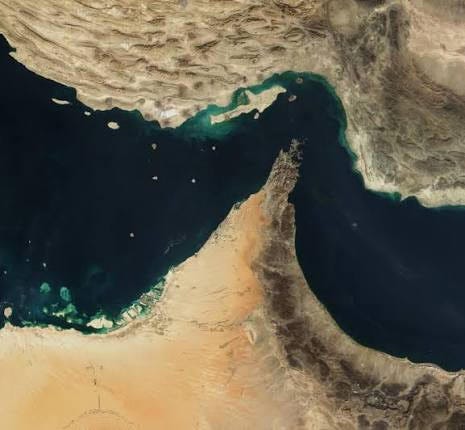
You see that teeny-tiny spot. That’s just a 21-mile stretch through which world peace has longed hinged.
And the decisions being made around that narrow stretch of water may determine whether this moment becomes a contained geopolitical crisis or something much larger and far more dangerous.
Donald Trump ran for president promising something very simple: no wars.
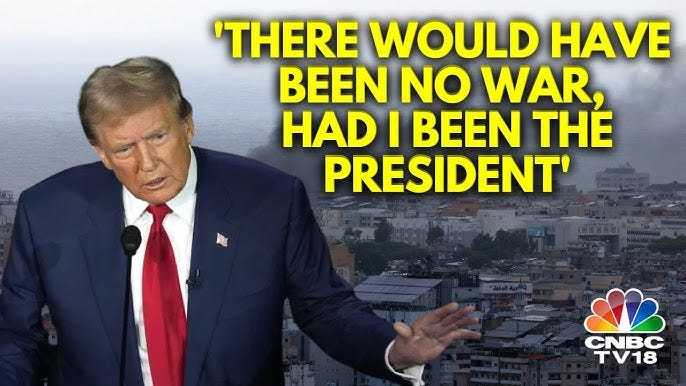
That promise was not subtle. It was one of the central themes of his campaign. His argument to voters was that Democrats would drag the country into catastrophic foreign conflicts while he would keep America out of them. Vote for him and the endless wars would stop.
Now, only months into his presidency, the United States has carried out a strike that reportedly wiped out much of Iran’s leadership in a single building and has begun positioning naval forces toward the most volatile energy chokepoint in the world.
That is not a minor escalation.
It is a move that generations of American policymakers understood could ignite a regional crisis.
And the most striking thing about the decision is how unclear the rationale appears to be.
Over the last several days the administration has offered a carousel of explanations. First the strike was described as necessary to prevent an imminent Iranian attack. Then it was framed as a response to long-term weapons threats. Then the story shifted again: Israel was going to strike regardless, so the United States decided to join.
The explanation keeps changing.
Which is usually a sign that the real explanation is simpler and less strategic than anyone would like to admit.
For decades, every American president understood the same uncomfortable truth about Iran.
Killing their leadership might feel satisfying.
But it carries enormous risk.
No one in Washington avoided that option because they liked the Iranian regime. Plenty of people — including millions of Iranians — do not mourn the loss of the country’s clerical leadership. But the strategic calculation to do this was, in policy-speak: insane.
Iran is not Iraq.
Iran is a nation of roughly ninety million people, with significant military infrastructure, a domestic arms industry, ballistic missile capabilities, and an extensive network of regional allies and proxy forces stretching across Lebanon, Syria, Iraq, and Yemen.
Destabilizing a state that large rarely produces a neat political transition.
It produces chaos.
And Iran has always possessed one particular lever that makes that chaos especially dangerous.
The Strait of Hormuz.
If you want to understand why this crisis matters, that narrow stretch of water between Iran and Oman is the entire story.
Roughly twenty percent of the world’s oil supply moves through the Strait of Hormuz. It is one of the most important energy chokepoints on Earth. When shipping through that corridor is disrupted — or even when traders merely fear it might be — global energy markets react immediately.
Which is exactly what we are seeing now.
Oil prices surged within hours of the escalation. Analysts are warning that crude could easily climb past $100 per barrel if tanker traffic remains disrupted. That kind of spike would not stay confined to oil markets. It would ripple through gasoline prices, shipping costs, food prices, and inflation across the global economy.
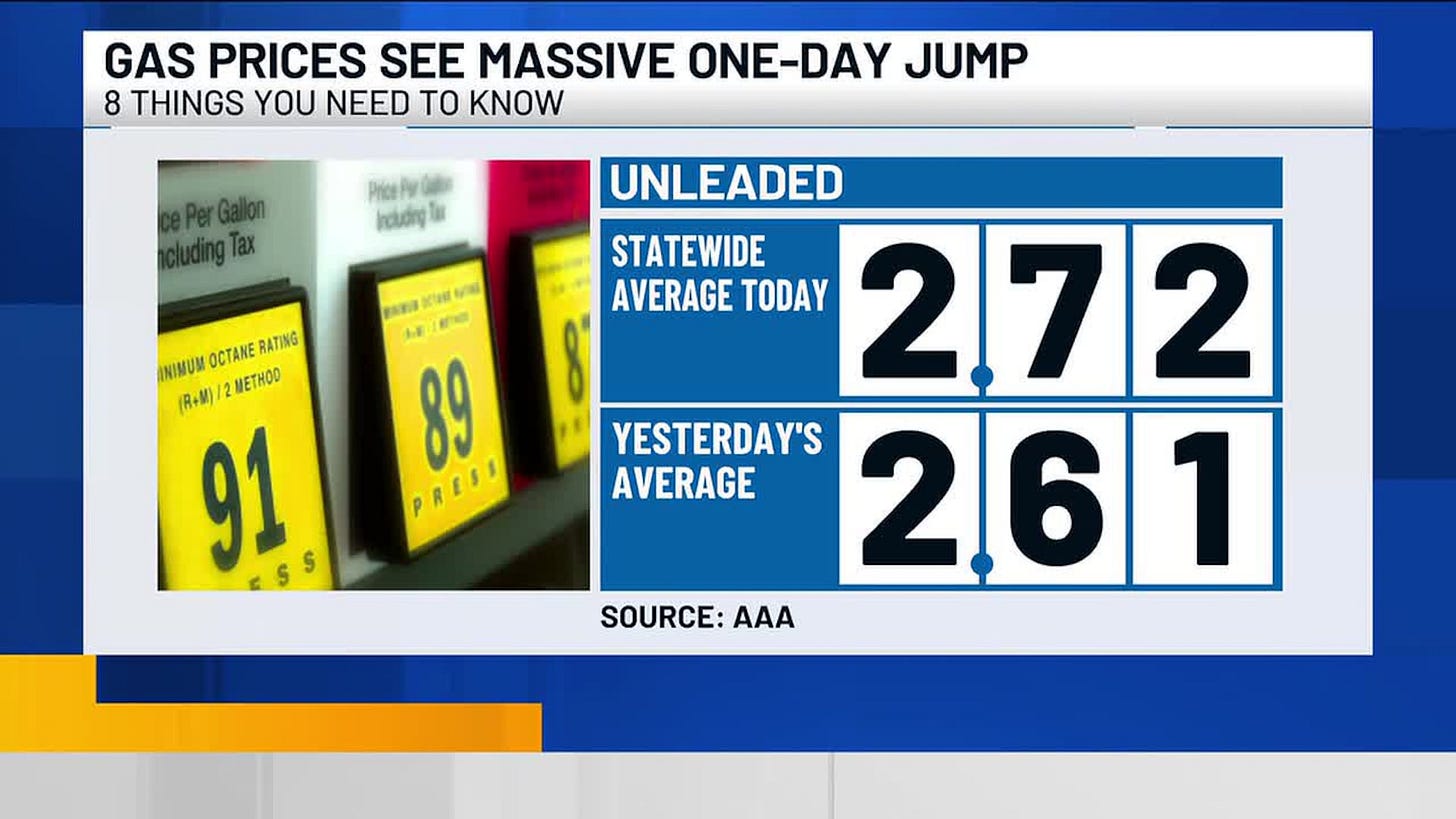
And that is precisely why every American administration for decades treated the Strait of Hormuz like a geopolitical tripwire.
Cross it, and things get serious very quickly. It is, well was, an uncrossable Rubicon.
Right now, the strait is completely shut down, with ships building up on both sides of the corridor. The Maltese decided to test Iran’s claim that they will attack any vessel that enters.
Iran has warned vessels against attempting to enter the corridor and the Trump Administration has announced they will use U.S. Naval ships to escort ships through.
What will happen when that happens is anyone’s guess.
And the United States has signaled that it intends to send naval forces into the strait to reopen it.
This is the point in the conversation where press briefings start using phrases like “troops on the ground.”
During a press conference, White House press secretary Karoline Leavitt was asked whether this escalation might eventually require American troops. Her answer was that the administration would not take any options off the table.
But the reality is that we are already much closer to that threshold than people realize.
Once American warships move into the Strait of Hormuz to force it open, thousands of American sailors will be operating directly inside a conflict zone where Iran has explicitly threatened to attack vessels.
Whether those troops are standing on desert sand or on the deck of a destroyer does not change the basic reality.
They are American service members placed in the middle of a potential battlefield.
Moms. Dads. Sons. Daughters.
America’s very best.
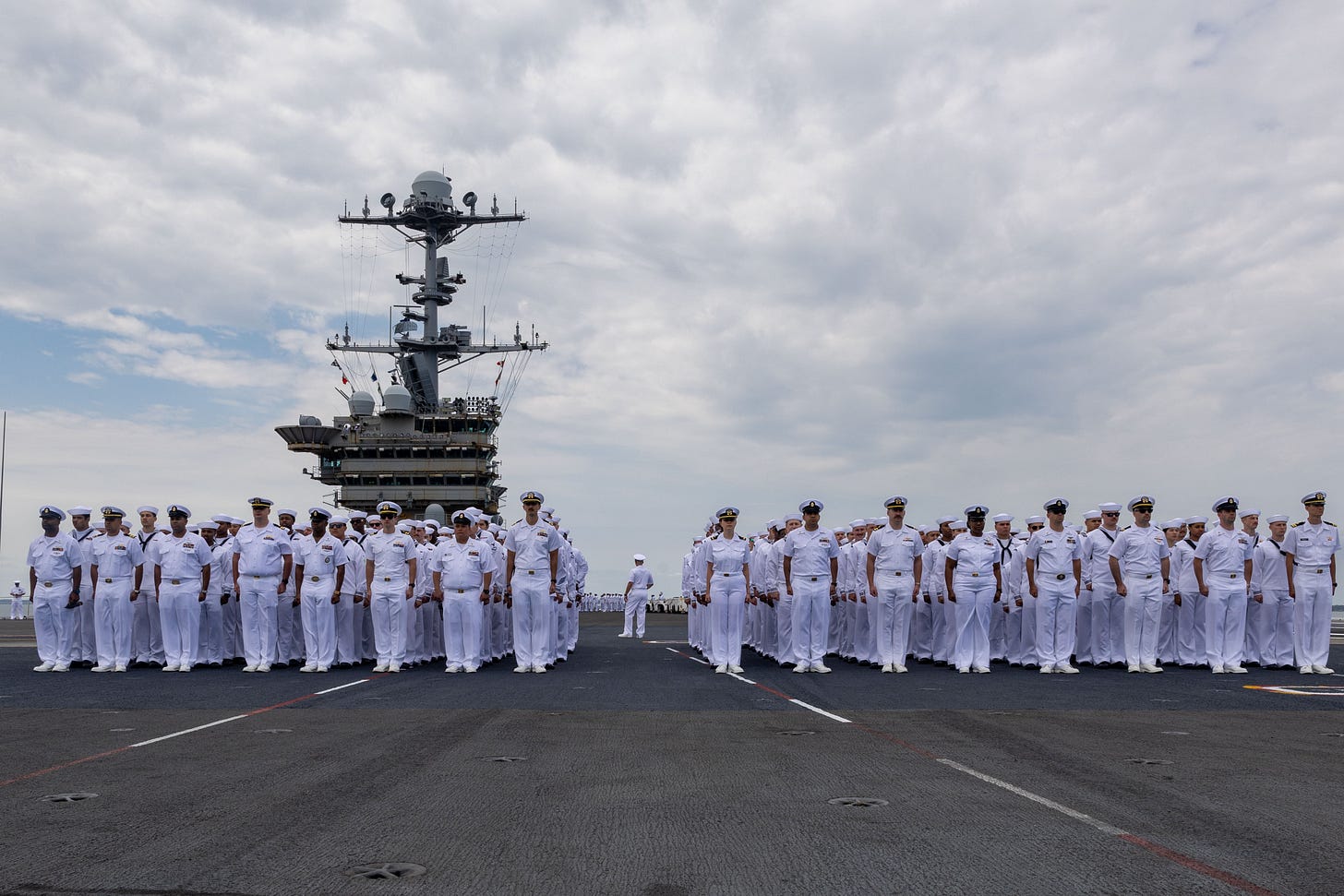
And if even a single ship is struck once those vessels enter the strait, the pressure for escalation will become enormous.
What makes this moment even more volatile is the broader regional landscape in which it is unfolding.
The Middle East is not a unified political bloc. It is a dense web of rivalries, alliances, and religious divisions that have shaped conflicts for generations. Iran is a Shia power, while many of the United States’ regional partners are Sunni-majority states, and the rivalry between those camps has fueled wars across Iraq, Syria, Lebanon, and Yemen.
When those tensions ignite, they rarely remain contained.
They spread.
And when they spread, American forces often end up standing somewhere in the middle.
Listening to administration officials talk about Iran right now produces a sense of historical déjà vu. The rhetoric — warnings about threats, confidence that escalation will produce stability, claims that decisive action will deter future aggression — echoes the language Americans heard in the months leading up to the Iraq War.
There is one important difference, though.
The Iraq invasion at least involved months of public debate and a vote in Congress authorizing the use of military force. The Bush administration came to Congress and tried — however dishonestly — to make its case to the American people.
Remember the arguments.
Weapons of mass destruction.
Biological weapons.
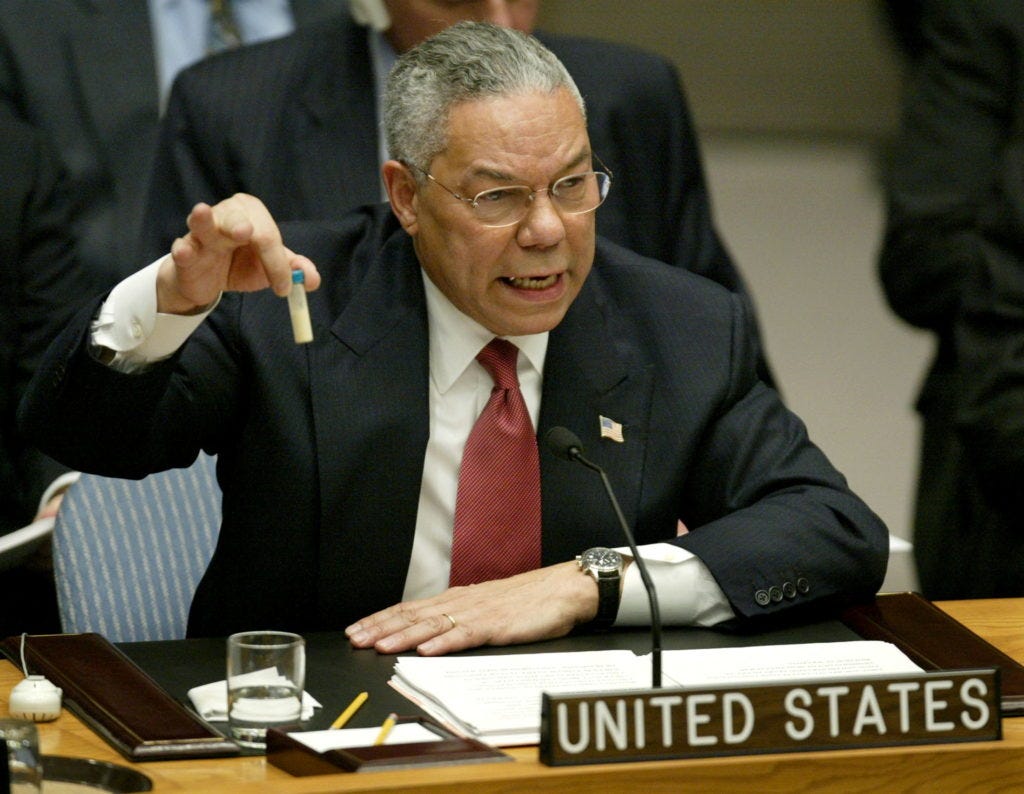
The famous warning that we did not want “the smoking gun to be a mushroom cloud.”
Those claims ultimately proved false.
But at least the country was told something was coming.
This time, Trump delivered a State of the Union address only days before the strike and barely mentioned Iran at all.
Meanwhile, behind the scenes, the United States had been assembling one of the largest military deployments in the region since the early years of the Iraq War.
And then, within days, the missiles flew.
There is another uncomfortable dimension to this crisis that cannot be ignored.
The strike reportedly occurred after pressure from the Israeli government.
Benjamin Netanyahu has spent decades pursuing policies that have dramatically reshaped Israel’s position in the world. I say this as someone who loves Israel and cares deeply about its future: Netanyahu has not been a gift to the country he governs.
Israel is the only Jewish state on Earth. Jews make up roughly 0.2 percent of the world’s population, and Israel is the one place where they hold sovereignty. That fact alone should make the long-term security and legitimacy of the state a matter of enormous global importance.
But over the past two decades, Netanyahu has steadily squandered a remarkable amount of international goodwill. His political strategy has repeatedly pushed Israel toward confrontation and isolation, fueling resentment abroad and deep division within Israel itself.
The tragedy is that many Israelis understand this perfectly well. Large numbers of them feel as trapped by Netanyahu’s leadership as Americans feel by their own dysfunctional politics.
And yet the consequences of his decisions extend far beyond Israeli domestic politics.
They ripple outward through the entire region.
And now they may have helped trigger one of the most dangerous escalations the Middle East has seen in years.
In the days ahead, the center of this crisis will almost certainly be the Strait of Hormuz.
That is where the world’s attention will turn.
If the strait remains closed, global energy markets will continue reacting. Gasoline prices will rise, shipping costs will spike, and governments around the world will begin pressuring all sides to prevent a prolonged disruption.
If American naval forces enter the strait and Iran chooses to attack a vessel, the crisis could escalate dramatically.
And once escalation begins in a region this volatile, events rarely unfold according to anyone’s plan.
That is the gamble that has just been made.
For decades, American presidents avoided crossing this particular line — not because they admired the Iranian regime, but because they understood the consequences.
Now we are about to find out what happens when someone ignores those consequences and sails straight into them.
Right through the Strait of Hormuz.
The coming days are going to revolve around a stretch of water most Americans had never heard of before this week.
Every tanker that approaches the Strait of Hormuz will become a global headline. Every radar contact, every drone sighting, every missile launch or naval maneuver will be watched in real time by governments, markets, and millions of people refreshing their phones.
Oil traders will watch it.
Navies will watch it.
Families of sailors aboard American ships will watch it.
Because this is the kind of moment when history turns not on speeches or press releases, but on a series of decisions made in tight spaces by people who understand exactly how little room for error they have.
The Middle East has lived through many crises. Some burned hot and faded quickly. Others spiraled outward into wars that lasted decades and reshaped the region.
Right now we are sitting at the edge of one of those moments.
A narrow channel of water.
Twenty percent of the world’s oil supply.
Warships moving toward it.
And a warning from Iran that vessels entering that channel may not make it out again.
This is what escalation actually looks like.
Not the dramatic speeches. Not the press conferences.
Just ships moving toward a place where everyone understands that the next decision could change everything.
And for the next few days — maybe the next few weeks — the entire world is going to be watching what happens in the Strait of Hormuz.
--30--
Written by Dr. Rachel Bitecofer. Cross-posted from her Substack, The Cycle. You can subscribe to her writings at that site.
Comments