


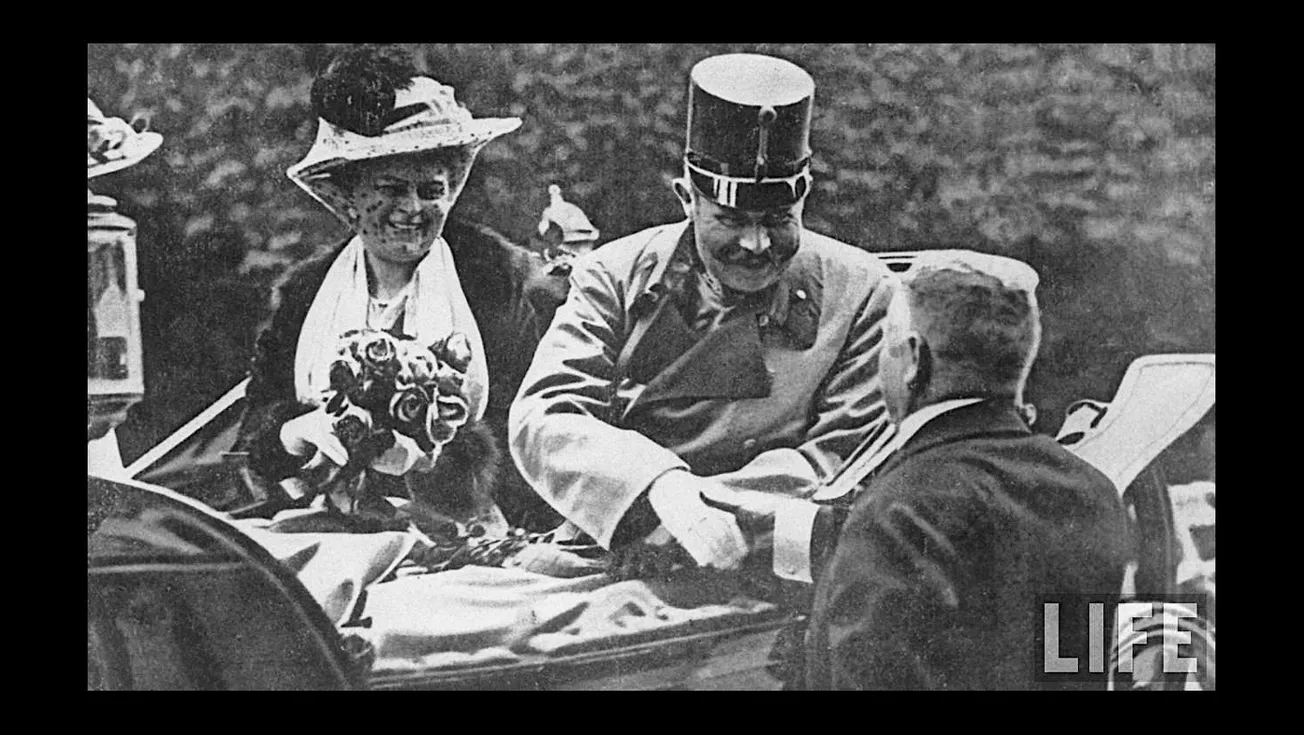
It wasn’t the shot heard ‘round the world. That one was fired at Lexington and Concord in 1775.
But two shots fired 111 years ago today by a teenage gunman triggered World War I, the bloodiest and most destructive clash of arms to that date.
The global conflict was so cataclysmic it was called The Great War until World War II, which was even more lethal and more devastating.
On June 28, 1914, Gavrilo Princip, a 19-year-old Bosnian Serb nationalist, assassinated Archduke Franz Ferdinand, heir to the Austro-Hungarian throne, in Sarajevo, Bosnia’s capital. He also killed the archduke’s wife, Sophie, duchess of Hohenberg.
Serbia wanted to create a South Slavic nation including Bosnia, which was part of the Austro-Hungarian Empire. Princip, who was quickly captured, was spared the death penalty because of his age. He died in prison in 1918.
Princip’s shots reverberated across Europe, then worldwide.
Austria-Hungary declared war on Serbia, which purportedly was behind a team of assassins, including Princip. Russia backed Serbia; France backed Russia.
Britain joined France and Russia, which, along with Italy, became the main Allied powers. Turkey and Bulgaria sided with Germany and Austria-Hungary, the Central Powers.
All that’s in the history books.
History books don’t say as much about the profound effect Princip’s pistol shots had on ordinary Americans like my great uncle, Thomas Henry Brown of Mayfield. He was the same age as Princip.
He might have read about the twin slayings in a Mayfield or Paducah newspaper. But I can’t imagine him, or any other American male of military age, thinking that twin murders 8,400 miles distant could possibly affect his life in any way.
Long before the advent of 24-hour cable TV news, few Americans knew about, or cared about, the so-called “Balkan Powder Keg.”
The open car in which Joseph and Sophie were riding when Princip shot them at close range is the most famous exhibit in the Austrian Military Museum in Vienna, Austria’s capital.
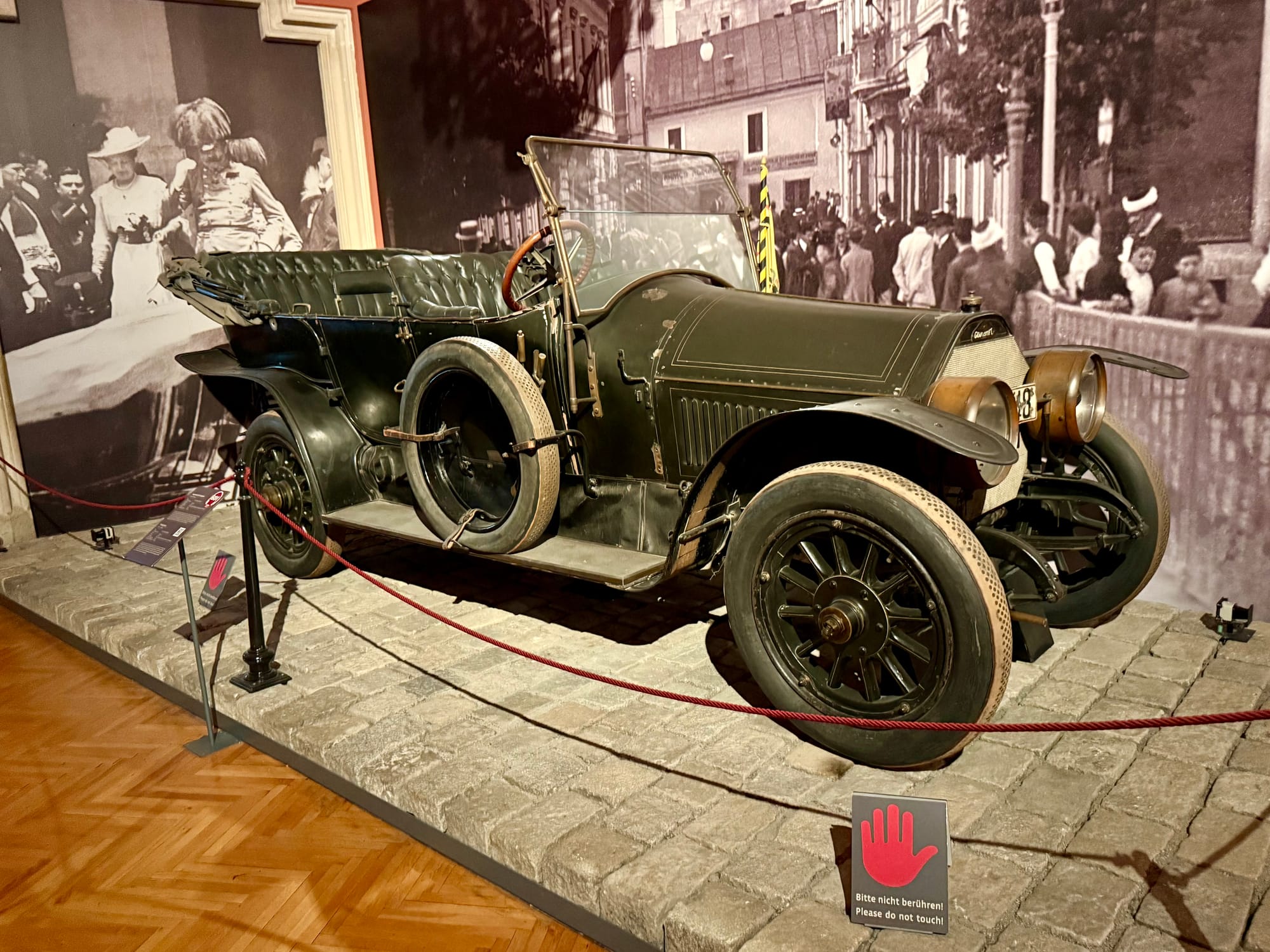
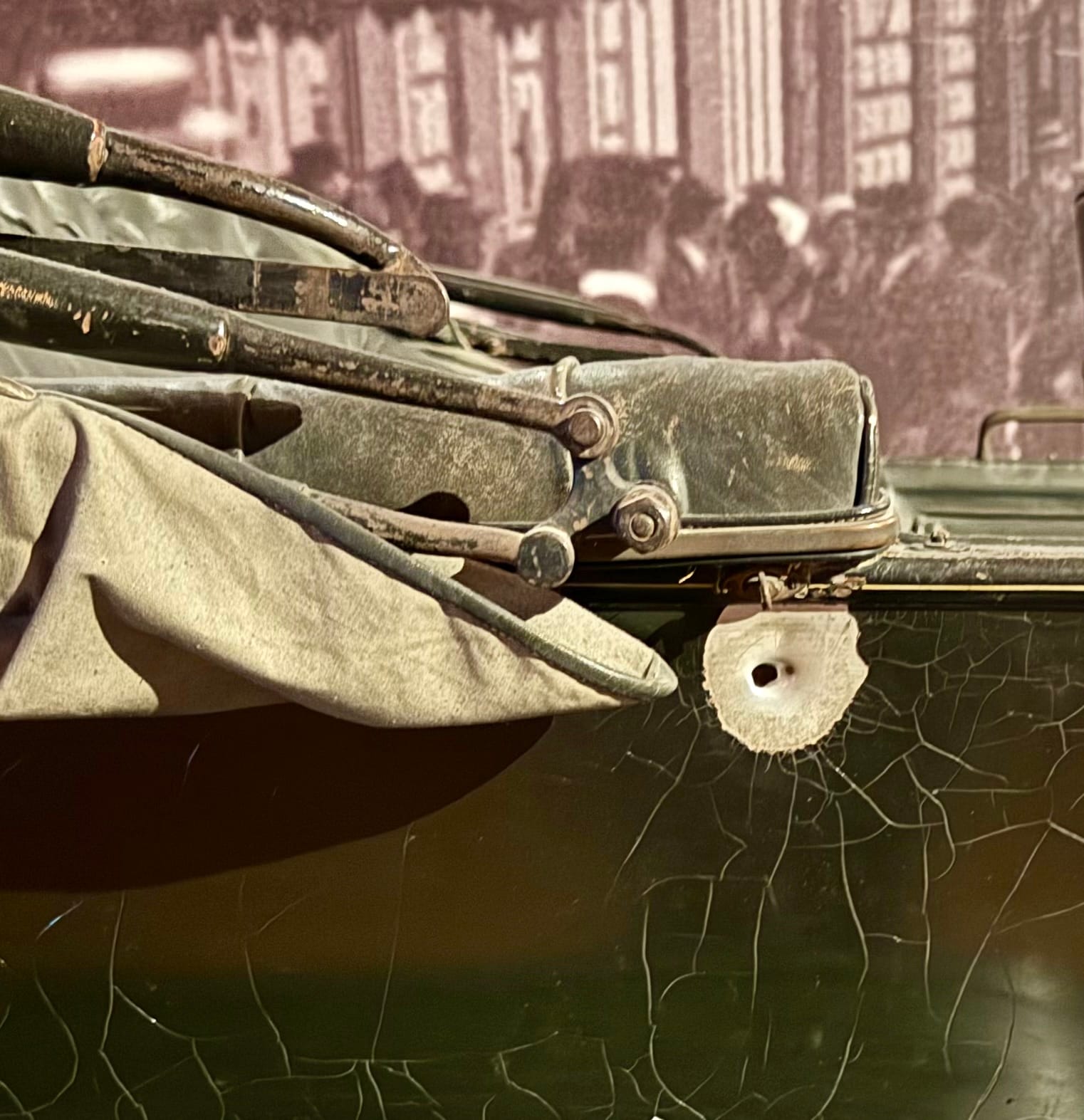
There is a bullet hole on the right rear side of the black, Austrian-made Graf & Stift open touring car that marks the path of the pistol shot that claimed Sophie’s life.
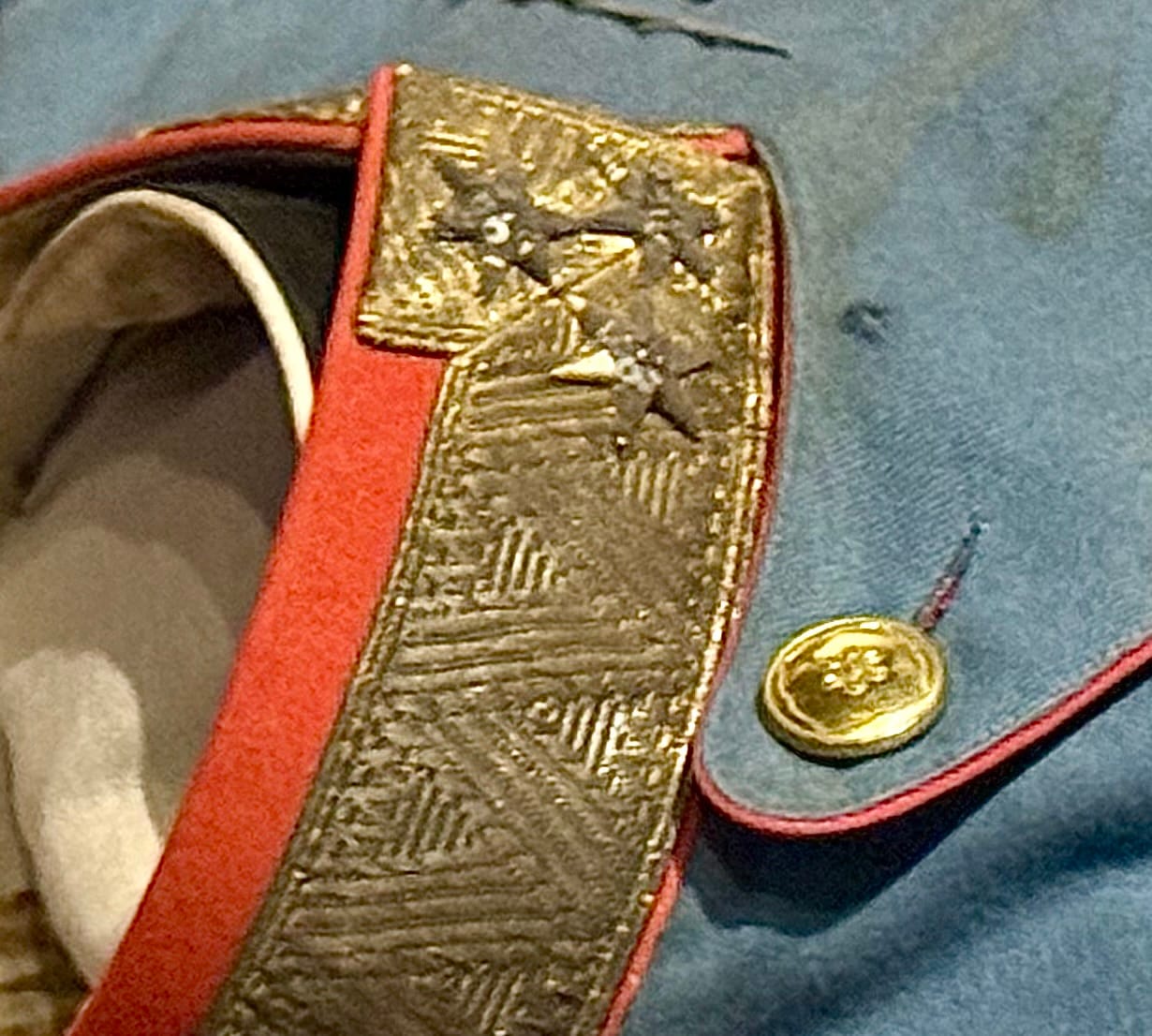
In a nearby display case is Franz Ferdinand’s faintly bloodstained bluish-gray tunic. There is a tiny hole, just below the collar on the right side, where Princip’s fatal round struck him.
I don’t know how closely Uncle Tom followed the war news from Europe. But he must have head about the German submarine that torpedoed and sank the Lusitania in 1915, killing nearly 1,200 aboard, including more than 120 Americans.
Most Americans were outraged, but didn’t consider the sinking enough for us to join the Allies against Germany.
Uncle Tom was a devout Democrat, so in 1916 he almost certainly voted to reelect President Woodrow Wilson, who won a second term on the slogan, “He kept us out of war.”
Nonetheless, after the Germans started sinking neutral American ships in 1917, Wilson declared war and Congress backed him up.
Six days before the fourth anniversary of Franz-Joseph’s assassination, Uncle Tom, in his brand new Army uniform left on a troopship for France. He wound up as a mechanic in the fledgling Army Air Service pilot training facility near Issoudun, which he pronounced “IZZY-dun.”
The troopship that brought him home docked in Brooklyn two days after the fifth anniversary of the assassination.
“How Ya Gonna Keep ‘Em Down On The Farm (After They’ve Seen Paree?)” was the title of a popular postwar tune about American soldiers who fought on European soil for the first time, but not the last.
Uncle Tom left Mayfield for Akron, Ohio, where he worked in a tire plant before coming home and getting married. His first wife died, and he married Aunt Billie and spent the rest of his working career selling shoes. After Aunt Billie died, he married Aunt Vic, who worked in the shoe store with him.
The Great War was called the “war to end war” and the “war to make the world safe for democracy.” It failed on both counts.
“Never before or since has such an insignificant event led to the deaths of so many innocent people,” said the British actor Robert Powell in narrating a documentary about the assassination.
Uncle Tom, who lived to age 78, came home unscathed. But more than 2,400 of his fellow Kentuckians, white and African American, lost their lives to enemy action or disease because of the lethal chain reaction that began with a double homicide in a bullet-holed car preserved in a museum halfway around the world from Thomas Henry Brown’s western Kentucky hometown.
--30--
Comments