

Democrats are angry – and understandably so. After weeks of standing firm, some in their party ultimately agreed to end the government shutdown without securing an extension of the enhanced Affordable Care Act subsidies. On the surface, it looks like a cave-in: Republicans get to declare victory, the government reopens, and millions of Americans — including me — are left staring down steep health-insurance premium hikes with little relief in sight.
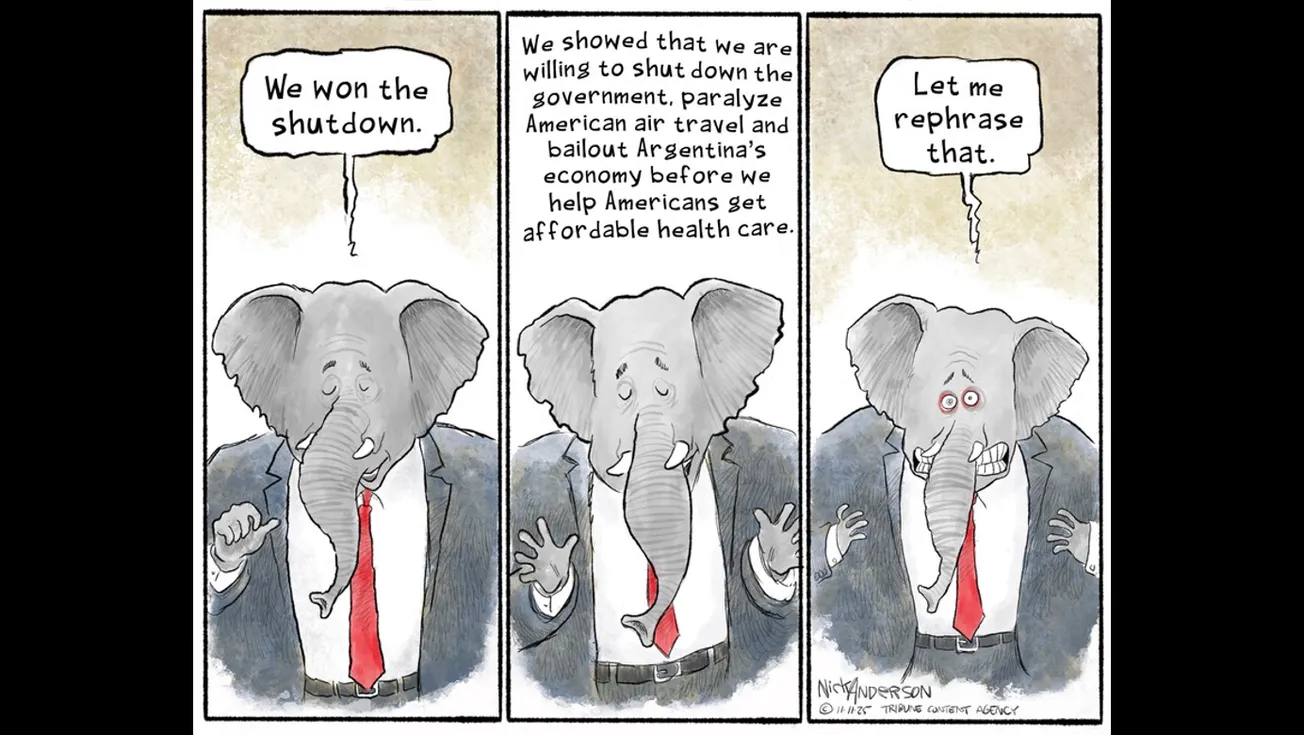
But here’s the thing: the shutdown may have ended, yet it accomplished something important. It dragged the GOP’s ongoing failure on health care into the harshest possible light. For all the sound and fury about spending, immigration, and the deficit, Republicans still have no plan — none — for helping Americans afford health insurance. They own the issue now, and they’re squirming under the spotlight.
I get my insurance through the ACA exchanges, and I’m bracing for a painful premium increase. I’m not alone – millions of middle-class Americans who don’t qualify for Medicaid or generous employer plans are watching their health-care costs balloon. We’re the people caught in the middle, and we’re tired of being political collateral damage. So when Democrats forced a confrontation over health-care funding, even knowing they might lose the immediate battle, it was the right hill to fight on. The shutdown forced the conversation back to where it belongs: on the GOP’s total abdication of responsibility for fixing a system they’ve spent a decade trying to sabotage.
Republicans can’t hide behind slogans anymore. Trump’s latest promise of a “beautiful” new health-care plan — coming any day now, just like it was in 2017, 2019, and 2024 — rang hollow even to members of his own party. When Marjorie Taylor Greene is complaining on social media that her own family’s ACA premiums are doubling and that GOP leaders “haven’t given us a plan,” you know the talking points have worn thin. Trump can ramble about “sending cash directly to people” all he wants, but it’s not a policy. It’s a photo-op with adjectives.
That’s why I’m not joining the chorus of Democrats furious about the compromise to reopen the government. The shutdown had reached an untenable point. We were heading into the holiday travel season, with air-traffic controllers and TSA agents working without pay – or worse, staying home. A few more days, and airports across the country could have been paralyzed. A shutdown isn’t an act of protest; it’s a slow-motion collapse of basic services. At some point, you have to put the country first and get the lights back on.
Ending the shutdown doesn’t mean surrendering the issue. In fact, the opposite is true. The fight put Republicans squarely on the record as the party that refuses to govern on health care. Senate Democrats extracted a commitment for a vote in December to extend ACA subsidies, a vote GOP senators will have to explain to their voters. And polls already show that nearly half of Americans trust Democrats more than Republicans on health care. That gap will only widen as more families open their renewal notices and see their premiums spike.
So, yes, the deal was ugly, imperfect, and unsatisfying. It didn’t deliver what progressives wanted, and it won’t keep my premiums from jumping. But it exposed the real stakes in this debate. Democrats believe health care is a public responsibility. Republicans, even after a decade in power, still believe in vague promises and slogans about “choice.” That contrast just got a lot sharper.
The shutdown didn’t end in a clear win for either party, but it did end with one truth standing out: Republicans have no plan. And for every American staring at a higher bill this month, that’s what matters most.
--30--
Comments