

Donald Trump won the 2024 election on a pledge to lower costs, but the cost of living has gone up for many American families under his presidency. From skyrocketing gas prices to rising energy costs to increasing healthcare premiums, the electorate is understandably sour on the state of the economy.
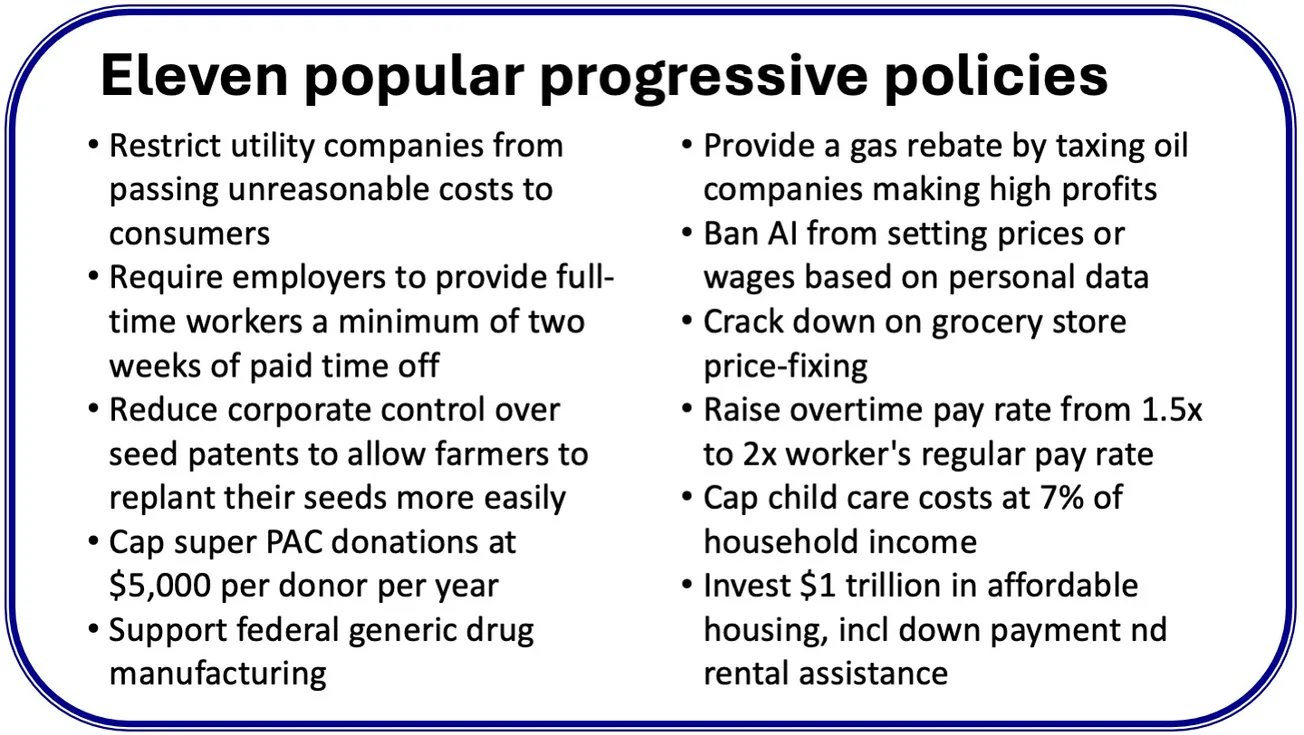
In a new survey, Data for Progress tested 11 policies being championed by the Congressional Progressive Caucus, aimed at lowering costs and reducing the power of large corporations. The slate of policies spans worker protections, consumer costs, corporate accountability, housing affordability, and campaign finance reform.
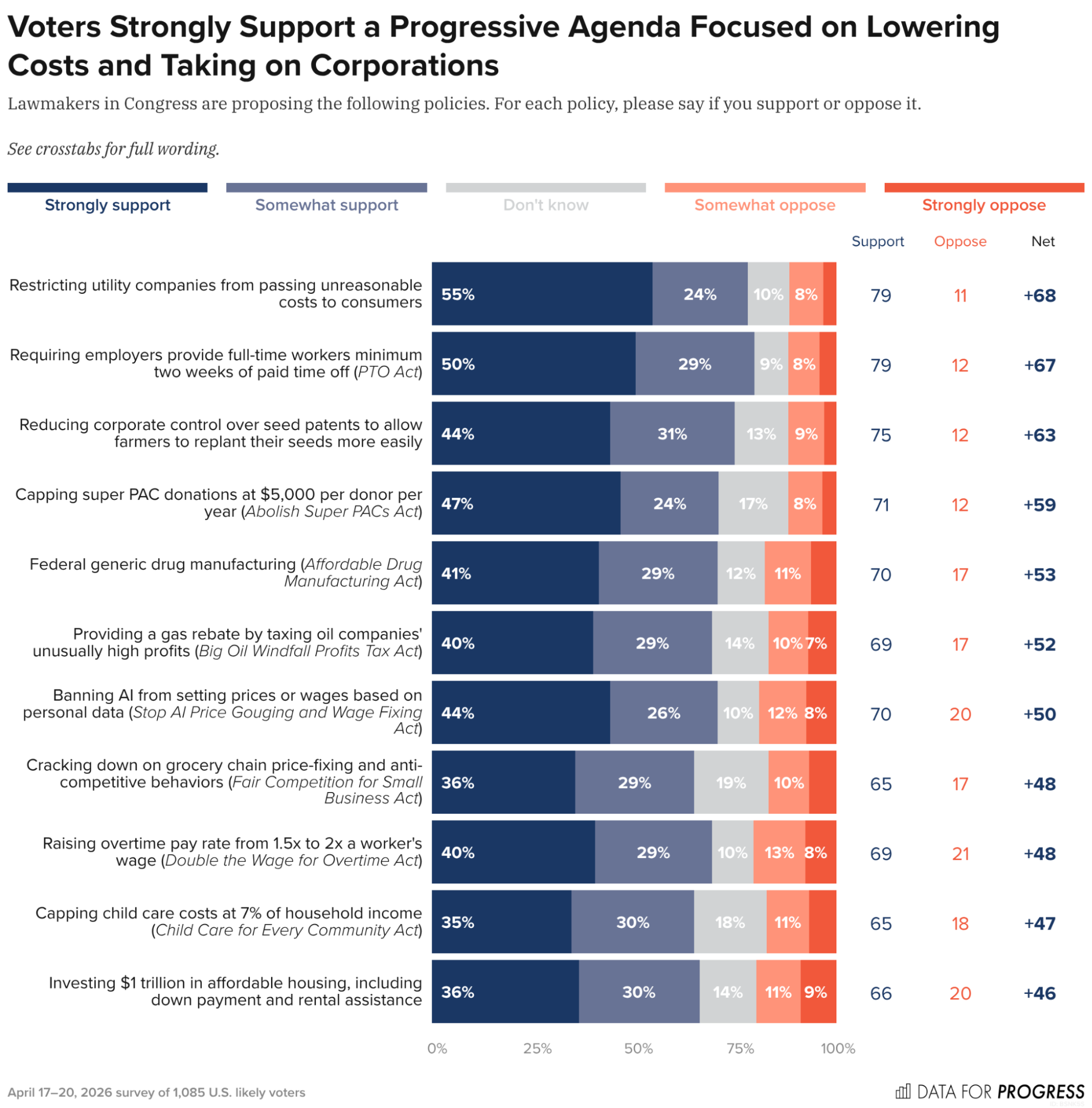
Every policy tested earns majority support from at least 3 in 5 voters. Requiring two weeks of paid time off for all full-time workers and restricting private utility companies from passing unreasonable costs on to customers are the most popular policies on the list — each earning support from 79% of voters.
Voters also show strong support for reducing corporate control over seed patents (75% support), capping super PAC donations (71%), banning artificial intelligence from setting prices or wages based on personal data (70%), and enabling federal generic drug manufacturing (70%).
Policies that earn support from at least 65% of voters also include taxing unusually high oil company profits to provide a gas rebate (69% support), raising overtime pay (69%), investing $1 trillion in affordable housing (66%), cracking down on grocery store price gouging (65%), and capping childcare costs (65%).
See the survey crosstabs for the full wording tested for each policy.
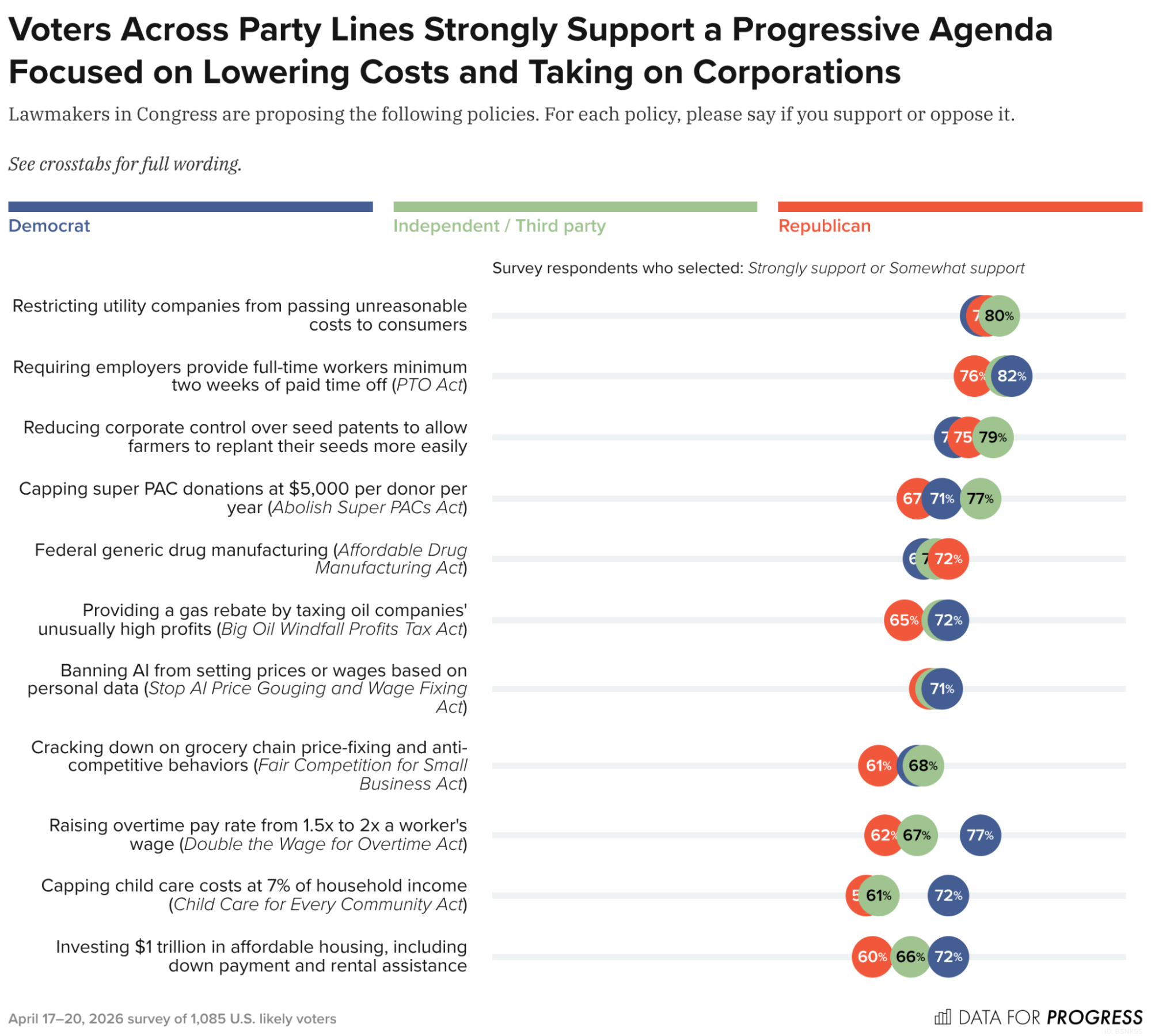
Support for these policies crosses party lines, with each receiving majority support among Democrats, Independents, and Republicans.
The survey also finds strong support for these policies among key voting blocs, including persuadable voters (voters who say they vote about equally for both major parties), Independent voters, voters who live in a swing district, and those who voted for Trump in 2024.
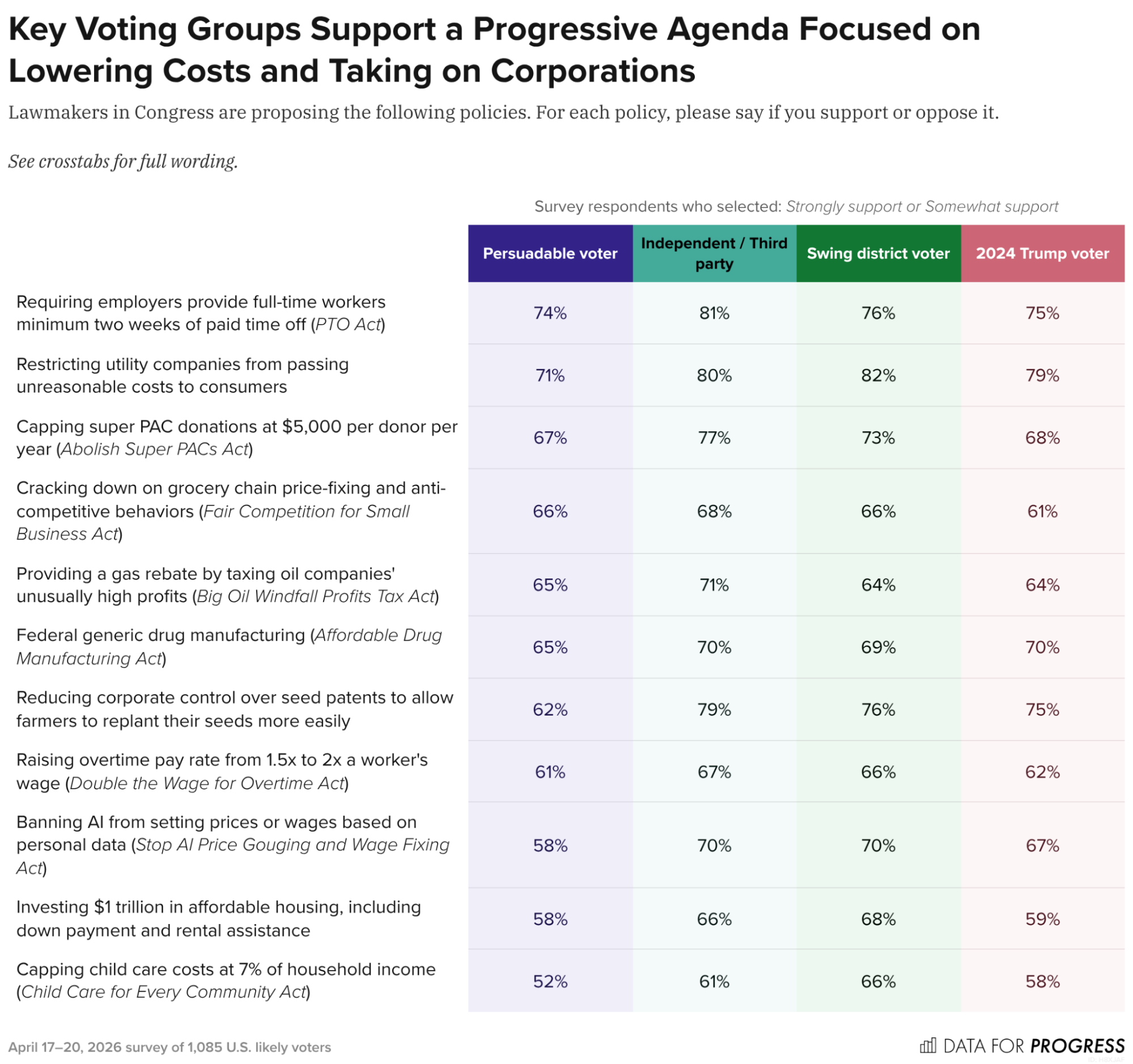
Broadly, these findings indicate that a progressive agenda focused on lowering costs and reining in the power of large corporations commands majority support with voters across the political spectrum, including Republicans and the persuadable voters who could play a key role in the upcoming midterm elections.
--30--
Cross-posted from Data for Progress.
Comments