

In all my 76 years, I never imagined I’d see a nationwide wave of May Day rallies in this, the most conservative and capitalist of western industrial lands. I figured hogs would fly first.
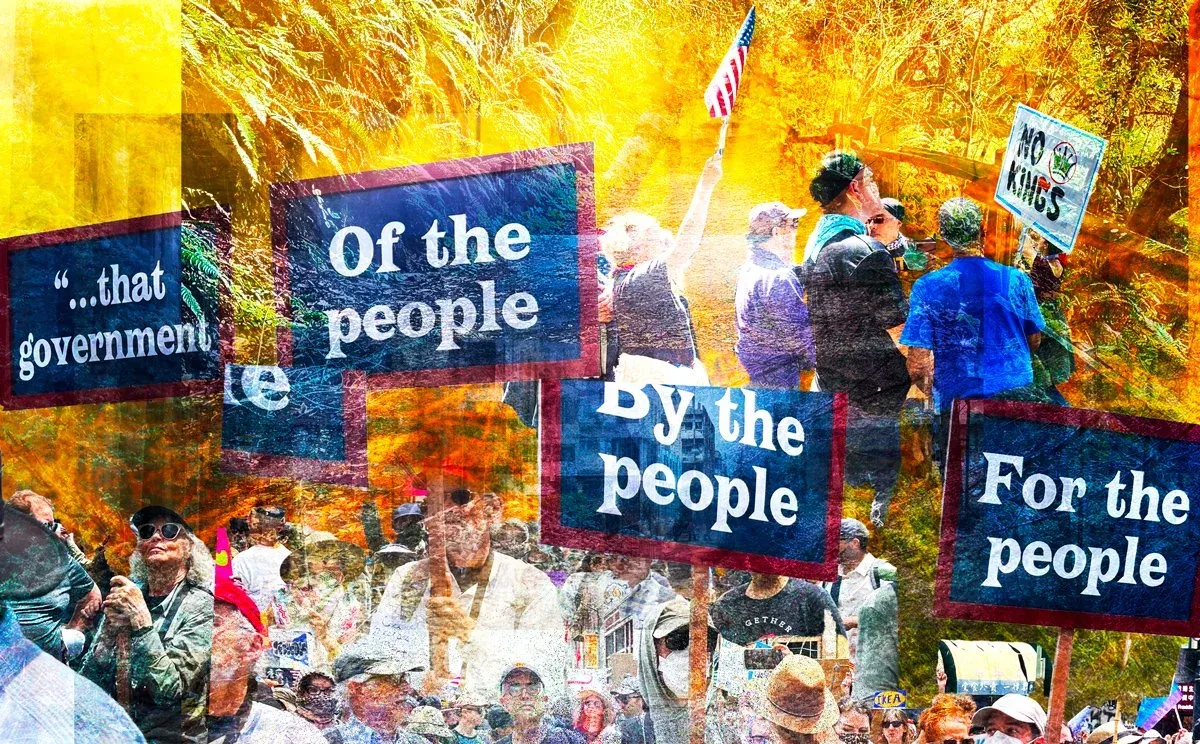
Yet this Friday, more than 3,500 marches and other protest actions are expected in cities and towns from coast to coast, including Louisville, Bowling Green, Danville and Paducah. That would more than triple the reported number of protests last year. (The Paducah event, which I plan to cover for Forward Kentucky, is set for 4:30 to 6 p.m. Central time Friday at the city’s Noble Park on Park Avenue.)
So here we go again, even more loudly disturbing the eternal rest of deceased Better-Dead-than-Red cold warriors – and giving MAGA Republicans another bad case of the vapors.
In Red states and Blue, tens of thousands are predicted to march and protest once more under the collective May Day Strong banner.
“Since 2024, the May Day Strong coalition has been hosting Solidarity School organizing trainings, sharing toolkits and encouraging people to set up their own May Day events,” wrote Kim Kelly in The Guardian. The goal is “a nationwide day of economic disruption,” organizers said; “by bringing business as usual to a halt, protesters will show how powerful the working class can be when it flexes its collective muscle.”
She added, “The May Day Strong coalition is made up of a formidable list of unions, Democratic Socialists of America chapters, pro-democracy groups such as Indivisible (who have jumped on board to amplify the May Day message), and labor, racial justice, anti-war, pro-democracy, climate justice, immigrant rights, and reproductive justice organizations.”
Four Rivers Indivisible, a western Kentucky branch of the national organization, is sponsoring the Paducah “day of collective action to demand a nation that puts workers over billionaires.” More information and a signup link are available on the group’s website.
Indivisible has a May Day Participation Guide on its website.
A Four Rivers email says the Paducah rally is part of “the national call for a day of NO WORK, NO SCHOOL, NO SHOPPING on May 1st to flex our economic power as workers, students, and everyday people to send a clear message to the Trump regime: we will not do business as usual while they trample our rights, terrorize our communities, and drag us into a senseless war in Iran.”
Four Rivers is urging people to only shop on May 1 at locally-owned businesses and use cash to pay for purchases.
Since the late 19th century, workers have celebrated May 1 as “International Labor Day” almost everywhere – except in the United States and Canada. Those two countries observe their own “Labor/Labour Day” on the first Monday in September.
Why May Day?
The industrial revolution started in Great Britain in the early 19th century and spread to Europe. The U.S. rapidly industrialized after the Civil War, catching and even surpassing the Old World.
Widespread exploitation of European workers led to labor militancy. Rightwing American industrialists and their political allies — both Republicans and Democrats — were scared stiff that European labor militancy would spread to the U.S. where workers, including women and children, toiled long hours at low pay in dangerous and even deadly conditions. Wealthy factory, mine, and mill owners, backed by police, state militia and even federal troops, bitterly — and often violently — resisted workers who tried to unionize.
Most employers also rejected the 8-hour-day, a common goal of U.S. labor. Typically, workers toiled 12 to 16 hours a day, six or seven days a week. Even the conservative American Federation of Labor, an association of skilled trades unions, joined the 8-hour-day workday movement.
The federation called for a nationwide strike for the 8-hour on May 1, 1886. As many as half a million workers took off work in cities to march and rally for the 8-hour day and against dangerous working conditions and low wages. Chicago was a center for labor activism.
Haymarket
On May 4, 1886, some anarchists and other labor activists gathered peacefully in Chicago’s Haymarket Square to demand the 8-hour day and show solidarity with striking workers who had been locked out at the McCormick Harvester works. Chicago police were notoriously anti-union. The day before, on May 3, officers had fired on workers and supporters, killing four and wounding many more.
When police arrived to break up the Haymarket rally, a homemade bomb suddenly exploded. Enraged, the police charged the crowd, shooting and clubbing indiscriminately. All told, seven officers were killed and 60 injured, several of them hit by friendly fire. The exact number of civilian casualties is unknown.
The bomb thrower was never identified. But eight Chicago anarchists were charged with conspiracy to commit murder, a capital crime.
Only one defendant was at the rally. The judge and jury were openly hostile to all of them, so the verdict was a foregone conclusion. All eight were convicted and four were hanged. (Gov. John Peter Altgeld, a Democrat elected in 1892, pardoned the remaining four.)
The blatant miscarriage of justice prompted an international outcry. In honor of the Haymarket martyrs, the 1889 International Socialist Conference named May Day a labor holiday, which became International Workers’ Day.
The origins of Labor Day in September
President Grover Cleveland, a conservative pro-business Democrat, feared that a May Day holiday might encourage international solidarity among workers. Thus, he sided with the AFL and other conservative “bread and butter” unions that favored a September holiday.
In 1894, after Labor Day had become an early September holiday in 23 states, Congress approved legislation fixing the first Monday in September as a national holiday. Cleveland signed the measure on June 28.
Retired Morehead State University historian John Hennen said American Labor Day observances “are completely divorced from any notion of international working-class solidarity.”
In Canada, Labor Day started on April 15, 1872, in Toronto where local unions “organized the country’s first significant ‘workers demonstration.’” American Labor Day observances, starting in the 1880s, were “inspired by the beginnings made in Canada,” according to the Canadian National Union of Public and General Employees.
U.S. conservatives redoubled their efforts to discredit International Labor Day during the Cold War. Though workers in other democracies celebrated (and still celebrate) the holiday, the American right, ever anti-union and fearful of international worker solidarity, smeared May 1 as a Communist celebration.
Despite the fall of the Soviet Union and its satellite states in eastern Europe 40-odd years ago, many Americans still associate May 1 with Ronald Reagan’s “Evil Empire” and parades of tanks, goose-stepping soldiers, and tractors towing missiles through Moscow’s Red Square.
When President Donald Trump, during his first administration, proclaimed May Day “Loyalty Day,” I was reminded of a quote from Henry Wallace. FDR’s third vice president and Progressive Party presidential candidate, he observed in 1948: “The American fascists are most easily recognized by their deliberate perversion of truth.”
So it continues with Donald Trump and his MAGA cult.
--30--
Comments